
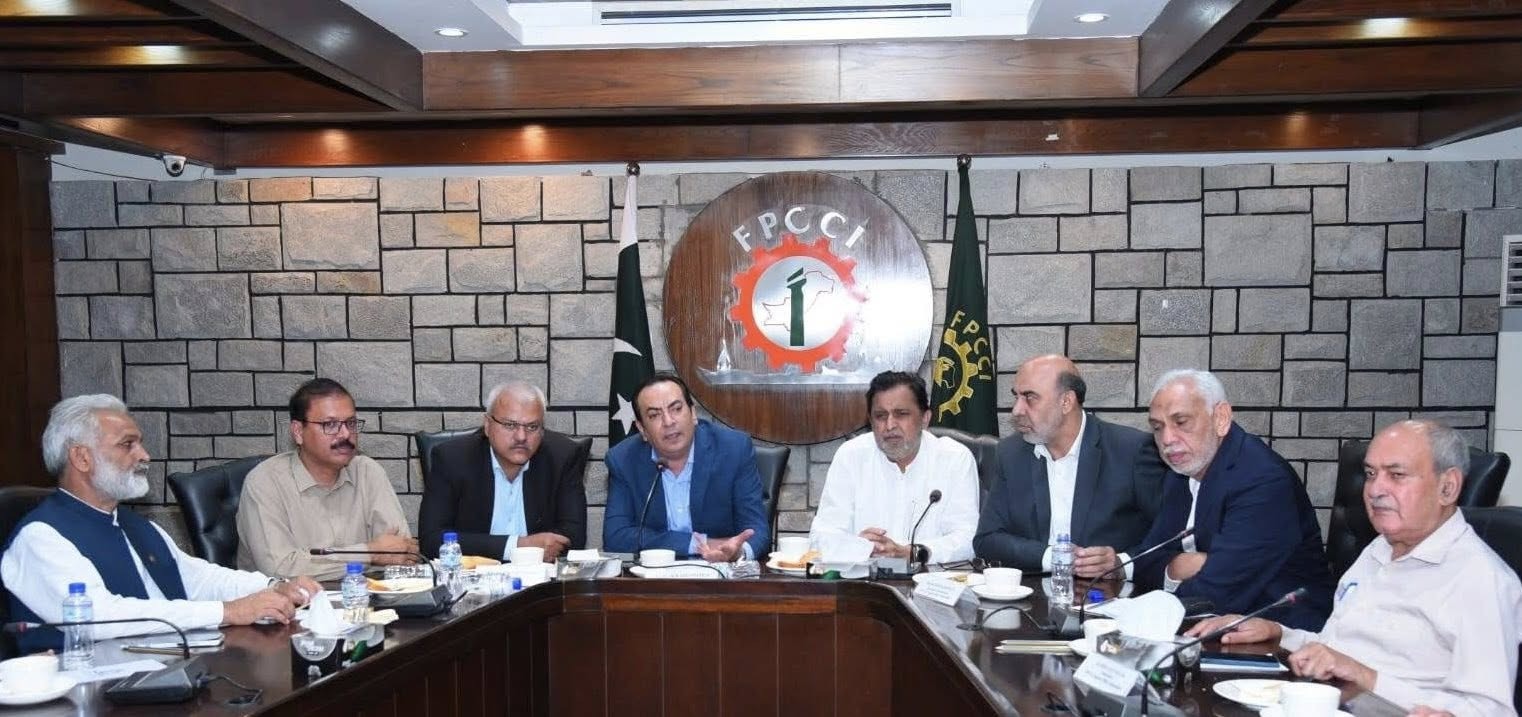

Former FPCCI Vice President lauds FPCCI & EPBD for presenting evidence-based, business-friendly and people-centric economic roadmap
Islamabad (26 May ) Former Vice President of the Federation of Pakistan Chambers of Commerce and Industry (FPCCI), Zahid Iqbal Chaudhry, has paid rich tribute to the Economic Policy & Business Development (EPBD) Think Tank for presenting Pakistan’s first-ever comprehensive shadow policy initiative, calling it a historic, timely and highly constructive contribution to the country’s economic policy discourse.
He said that the initiative marks a defining moment in Pakistan’s policy history, as it provides an independent, non-partisan and evidence-based alternative framework for economic growth, fiscal reform, taxation, development planning and institutional improvement. He noted that such a serious and research-driven effort was long needed to bridge the gap between official policy frameworks, business realities and public expectations.
Zahid Iqbal Chaudhry said that EPBD’s landmark set of documents, including the Shadow Federal Budget 2026-27, Shadow Economic Survey of Pakistan, Shadow Five-Year Development Plan 2026-31, and Tax Policy & Administration Reforms, offers a practical roadmap to move Pakistan from short-term stabilization towards sustainable, inclusive and export-led growth.
He said the private sector has too often been treated merely as a revenue source, whereas it should be recognized as a true partner in national development. “Industry, trade and enterprise create jobs, generate exports, attract investment and contribute to public revenues. A business-friendly and people-centric policy framework is not a concession to the private sector; it is an investment in Pakistan’s economic future,” he added.
Referring to the Shadow Five-Year Development Plan, Zahid Iqbal Chaudhry appreciated EPBD’s focus on 21 critical sectors, including agriculture, energy, textiles, digital economy, housing and construction, pharmaceuticals, logistics, human resource development and other high-impact areas. He said the proposed investment framework of around PKR 18.5 trillion, along with the target of raising GDP growth to 8.5 percent by FY2031, reflects a bold yet structured vision for national transformation.
He further said that the proposed reforms in taxation are particularly important for restoring business confidence. He appreciated recommendations such as rationalization of tax rates, reduction in the burden on salaried individuals and businesses, automation of tax refunds, use of AI-based audits, protection of taxpayer rights, broadening of the tax base, and simplification of tax administration.
Zahid Iqbal Chaudhry said Pakistan’s existing economic model has placed excessive pressure on compliant taxpayers and productive sectors, while failing to adequately expand the tax base or reduce the cost of doing business. He added that without predictable policies, competitive energy costs, affordable finance, export facilitation and institutional coordination, Pakistan cannot achieve sustained growth.
He also praised the Shadow Economic Survey for going beyond conventional statistics and highlighting the real impact of economic policy on poverty, unemployment, brain drain, industrial productivity, exports, private investment and human development. He said that public policy must ultimately be judged by its ability to improve real incomes, create jobs and reduce hardship for ordinary citizens.
Zahid Iqbal Chaudhry congratulated SM Tanveer Patron In Chief UBG , Atif Ikram President FPCCI , Dr. Gohar Ejaz, Sardar Ahmad Nawaz Sukhera, the EPBD Board, research team, consultants, business chambers and all stakeholders involved in this national effort. He said the initiative has opened a new chapter of informed economic debate in Pakistan and should be taken seriously by policymakers.
He urged the government to carefully review EPBD’s recommendations and include the private sector, experts, parliament and civil society in the budget-making and policy formulation process. He said Pakistan now needs a shift from survival-based economic management to growth-oriented, people-friendly and business-enabling reforms that can create jobs, increase exports, attract investment and ensure long-term prosperity.
Leave a Reply