
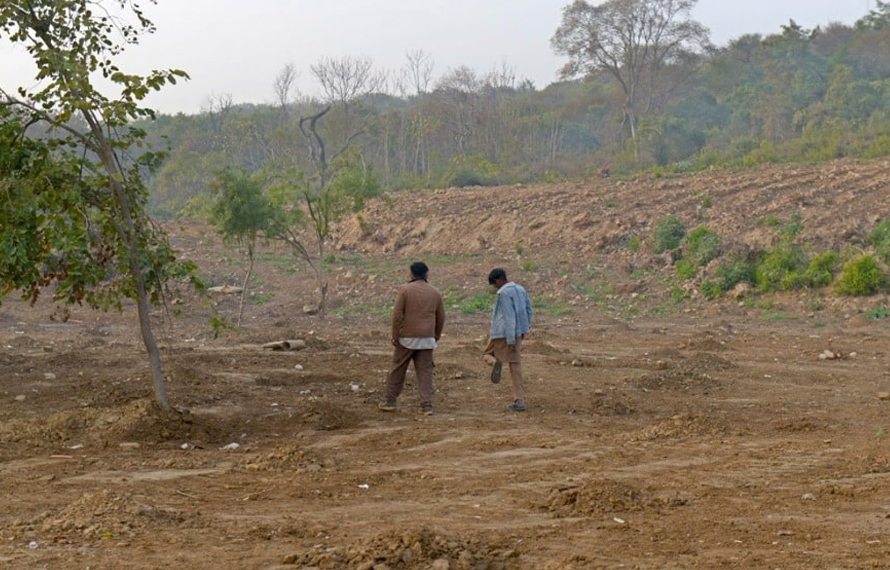

In the heart of Shakarparian, one of Islamabad’s oldest green spaces, the calm of the morning was shattered. Instead of birdsong and the gentle rustle of leaves, there was a frantic roar, chainsaws cutting through century,old branches. High above, a Golden Oriole flitted in panic. On the forest floor, wild boars and jackals ran across patches of sunlight that had never reached them before.
It felt like the sky itself was falling, not in pieces, but in branches. For the city’s wildlife, the morning of January 2026 was the start of a new reality. Yet, beyond the immediate chaos, this was a story not just about birds and trees, but about Islamabad taking a brave step toward a cleaner, healthier future.
Why the Mulberry Came Here
To understand why chainsaws are tearing through these forests, we must go back to the 1960s. When Islamabad was being built as Pakistan’s new capital, the planners wanted it green, fast. They brought in the Paper Mulberry, or Broussonetia papyrifera, from East Asia.
It seemed perfect: fast-growing, hardy, and almost pest-proof. In a couple of decades, Islamabad became one of the greenest capitals in the world. But the mulberry didn’t just grow, it took over. Native trees like Shisham and Chinar struggled to survive, and before long, the Paper Mulberry covered nearly 90% of Shakarparian and F 9 Park.
Read More: Trump renews Nobel Peace Prize claim, cites Pakistan-India ceasefire role
A Question of Health
The beauty of these trees came with a hidden cost. Every spring, Paper Mulberry trees release huge amounts of pollen, turning Islamabad into what many call a “Pollen Bowl.” Thousands of residents suffer from severe allergies, asthma, and other respiratory problems.
On January 9, 2026, Federal Minister for Climate Change Dr. Musadik Malik chaired a high-level meeting focused on public health. The data was clear: pollen counts often exceed 40,000 per cubic meter, seriously affecting people’s health. The government decided it was time to act, prioritizing human life over invasive greenery.
The Surgical Strike on Mulberries
CDA Deputy DG Environment Irfan Khan Niazi confirmed that 29,115 Paper Mulberry trees have been removed so far. This is not random deforestation, it is a targeted effort, focusing on areas where the invasive trees have completely taken over.
The removal focuses on:
• Shakarparian: Restoring the natural entry to the city.
• F 9 Park: Making the central park safe for walkers and families.
• H 8 and H 9 Sectors: Protecting densely populated areas from pollen hazards.
The 1:3 Promise
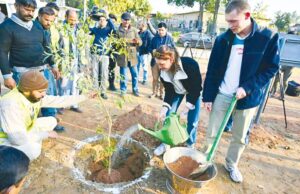
Perhaps the most promising part of this initiative is the restoration plan. For every Paper Mulberry removed, three native trees are being planted. This means Sukh Chayn, Sheesham, and Chinar are returning to Islamabad’s landscape, bringing diversity back to the city’s forests.
Already, over 40,000 indigenous trees have been planted. Public-private partnerships, including schools and corporations like OGDCL, are joining hands to ensure the city doesn’t just regain its greenery, it thrives.
The Transition Period
Replacing centuries-old trees with saplings takes time. The shade that once cooled Shakarparian won’t return immediately. This “transition period” is an investment, short-term sacrifice for long-term gains. These young trees represent a future where clean air, diversity, and public health coexist.
A Legacy of Clean Air
Islamabad stands at a crucial crossroads. With the decisions taken by Dr. Musadik Malik and the CDA, the city is embracing long-term vision over nostalgia. The whine of chainsaws today may feel harsh, but in the coming years, the rustle of native leaves will tell a story of foresight and care.
As these 87,000 new trees grow, they carry a promise: Islamabad will stay green, vibrant, and most importantly, breathable for all.
Leave a Reply