
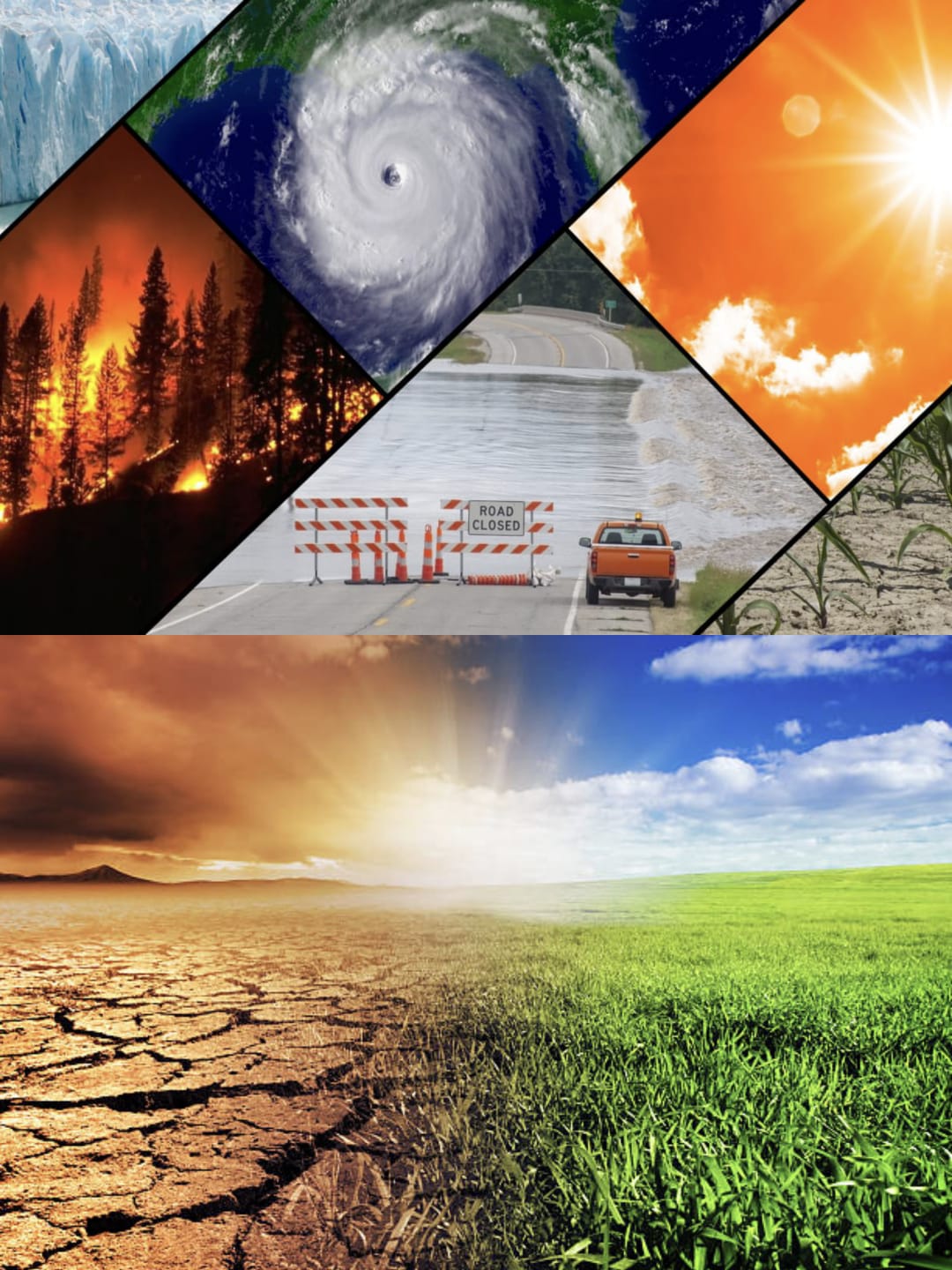

A shocking climatic change is setting its roots in the northern highlands of Pakistan where jagged ridgelines of Gilgit-Baltistan used to ensure cool relief even during mid summers. during the month of July of the year 2025, in two of the major towns of the region, Chilas and Bunji registered record high temperatures in their history. The Pakistan Meteorological Department (PMD) said Chilas blazed all records on July 5 by hitting 48.5C, and Bunji also recorded a high of 46.1C by breaching records of decades. Previous records were 47.7 C (July 17 1997) in Chilas, and 45.6 C (July 12, 1971) in Bunji.
These are not fluctuating variations. They are the clear indications of a warming world and a local climate that is becoming unstable and is quickly going beyond its historical range. The normal summertime temperatures (day time) in Gilgit-Baltistan used to transition between 29 C and 32 C, making the recent temperatures a 15-20 C degrees above-average temperature-wise-a phenomenon which has far-reaching and hazardous implications.
Among the most urgent issues, there is the presence of glaciers that are tending to accelerate their meltdown in this mountainous area which hosts more than 5,200 glaciers including the largest ones beyond the polar areas. The International Centre for Integrated Mountain Development (ICIMOD) released a report in 2023 showing that Eastern Himalaya and Hindu Kush glaciers had been losing mass at a speed of 0.3-1 m of water equivalent in the year; this loss is expected to be doubled by 2050 unless emission levels decrease. The Glacial Lake Outburst Floods (GLOFs) in Pakistan have already grown, but more than 30 glacial water lakes in Gilgit-Baltistan and Khyber Pakhtunkhwa are currently in a significantly uncomfortably vulnerable situation regarding their potential bursting.
As a matter of fact, a total of at least 24 GLOFs were reported in Pakistan over the past 12 years (2010 to 2022), with the majority of them being in July during summer heat. There was also the great resultant of one of the GLOFs caused in May 2022 in Hunza that damaged bridges and destroyed homes. Such recurrence events in 2025 are a major cause of concern since new heat records in Chilas and Bunji have already caused great concern among authorities given that the PMD has already warned against high-risk flooding in regions near the basin of Indus River.
Environmental impact also comes along with the socioeconomic disturbance. A majority of about 70 percent of the population of Gilgit-Baltistan live through subsistence agriculture and livestock keeping. Crops such as maize, wheat and barley already threatened by late frost or water scarcity, are now threatened by heatwaves that lead to heat stress and increase evapotranspiration. Livestock animals, especially sheep and goats, are less productive when exposed to long periods of high temperature, and without veterinary services and protection, are likely to experience outbreaks.
Further, consequences of this heat surge are serious as far as health is concerned. Longstanding contact with the weatherowyers higher than 40 0 C can lead to heat exhaustion, dehydration, and heat stroke, the severity of which is especially fatal to citizens of high-altitude societies in which the healthcare infrastructure is limited. In a 2024 report released by the Aga Khan Health Services in Pakistan, a 24 percent increase in heat-related illnesses in Gilgit and Chilas that happened during one month of high temperatures was reported. Respiratory complications among the elderly and children were reported to have recorded a sharp rise at the clinics owing to heat and dust.
The area is also strained in infrastructure. Roads built on the permafrost, which thaw and on the unstable slopes develop an inclination to landslides and erosion. A major road bearing the name of Karakoram Highway that connects the north with the rest of Pakistan is among the roads that continuously close in case of flooding or a subset of floods the slides after the heatwave. In the meantime, power infrastructure is under twofold pressure when the production of hydropower becomes unreliable, and the demand of electricity jumps to run cooling systems.
However, despite all these increasing risks, the response policy and adaptation is still slow. Gilgit-Baltistan has a low institutional capacity and is allocated below 1 percent of the annual Pakistani development budget planning, as evidenced in a 2022 report published by the Planning Commission of Pakistan. It has limited localised climate resilient initiatives and most of the early warning flooding systems are either obsolete or cannot be accessed by the rural dwellers.
The solutions are however at reach. First, it is important to improve meteorological infrastructure. Presently this part has less than 15 automated weather stations that is way much below the threshold of real-time coverage of glacier and hydrologic monitoring. An increase in the coverage of these systems would deliver vital lead time to Flood warnings.
Second, it is highly necessary to make investments in the climate-resilient agriculture. It could save lives by introducing heat and drought resistant seed varieties, better use of irrigation by using sprinkler and drip systems, and more crop choice. Since the Glacial Lake Outburst Flood Risk Reduction Project (GLOF-II) introduced by the government in partnership with UNDP and the Green Climate Fund should not be limited to pilot villages, it is necessary to include such regions as Bunji and Diamer.
Third, the community-based adaptation should replace the regional planning pillar. Local resilience can be enhanced by training programs on disaster preparedness and a high flood shelter construction, as well as education campaigns on managing heat stress. Conventional wisdom such as crop rotation, rain water harvesting and utilization of indigenous cooling buildings should also be taught and incorporated.
Lastly, national climate strategy will have to be informed by this local crisis. By a similar token, Pakistan is positioned 8th on the Global Climate Risk Index (2021) regardless of the fact that the country contributes not more than 1 per cent globally. The international climate finance must be utilized to secure such vulnerable areas as Gilgit-Baltistan. The National Adaptation Plan (NAP) that is planned to be implemented in the future should allocate funds explicitly on high-mountain climate resilience.
The meteorological record breaking temperatures in Chilas and Bunji is not only a climate event. They are warnings, they ring like signals off the mountains telling of another, more severe climate truth. We, therefore, should not only act with urgency, strategy, and compassion before it is too late; otherwise, we will lose more than just ice and rivers. We jeopardize the future of not only a place whose beauty is stunning but of vital importance to the ecology, water security and the cultural heritage of Pakistan.
The events taking place in these valleys shouldn’t be seen as isolated occurrences. They are a part of a broader narrative about fragile systems, changing climates, and the pressing need for resilience. It’s time for the world to take notice of the burning mountains.
About Author:
Safia Noor is an MS scholar in Environmental Science, currently pursuing her studies at Bahria University Karachi. She is committed to environmental research, focusing on sustainability, climate resilience, and marine ecosystems. As an active student, she participates in academic conferences, workshops, and collaborative research projects. Her goal is to contribute to effective environmental policies and sustainable development in Pakistan.
Leave a Reply