
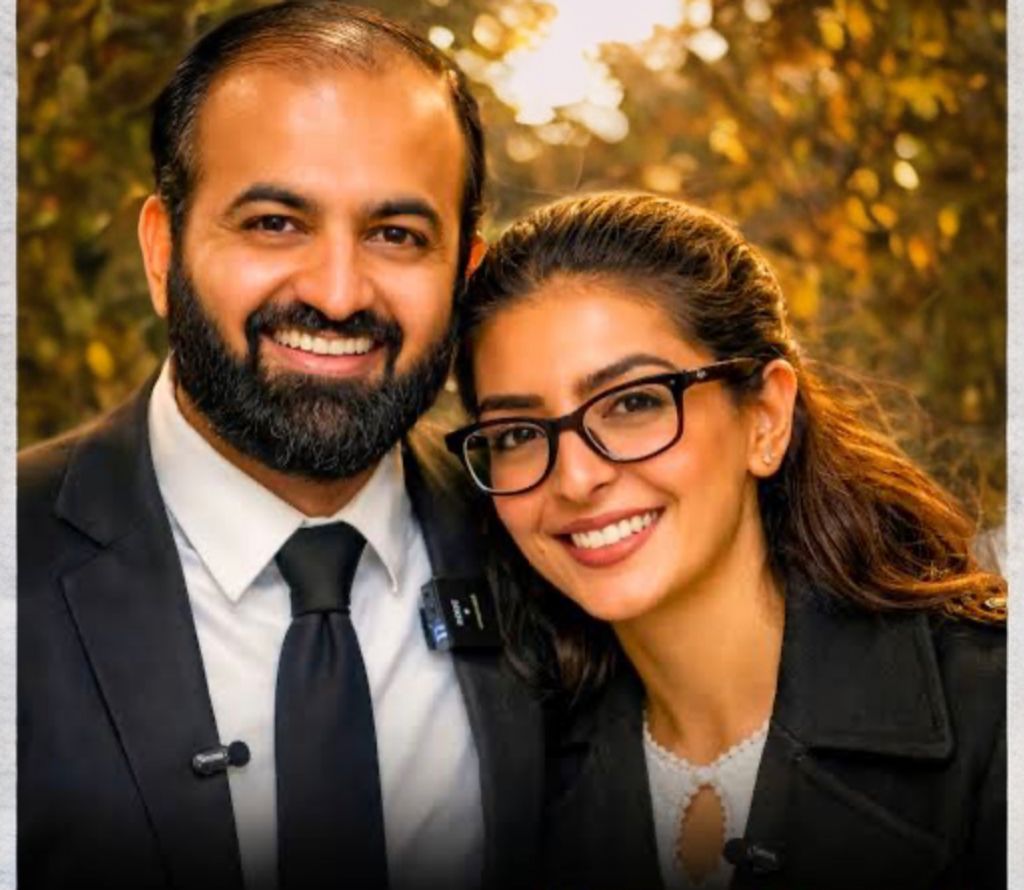
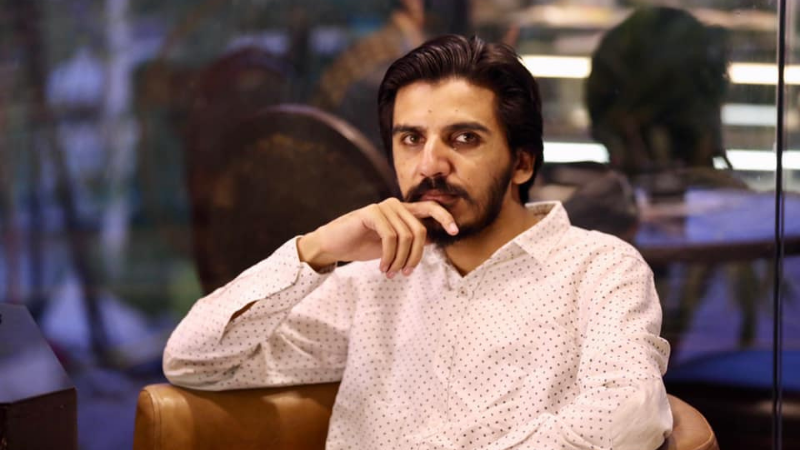
In Islamabad, poor settlements are being demolished to build high-rise luxury towers for the rich. I wish Imaan and Hadi were here; they would have stood in front of the cranes and said, “Over our dead bodies.” When I think about all this and look up and around me, all I see is darkness.
It was the beginning of November 2020. I had been facing a court trial for nearly two months over a ridiculous FIR (First Information Report) accusing me of propaganda against the military. In the FIA’s special PECA (Prevention of Electronic Crimes Act) court, I was being hit like a football between the FIA and the police. Both were busy shifting the prosecution’s responsibility onto each other. I don’t remember the judge’s name overseeing my trial, but his last name was Niazi. He had granted me interim bail but was now neither confirming nor rejecting it. Instead, he would extend the interim bail by a day and then summon me for another appearance very early the next morning. He had ordered that I (Asad Ali Toor) must arrive first very early in the morning to mark his attendance; otherwise, he would cancel my interim bail.
I had to drive an hour every day from the F-11 sector in Islamabad to the Rawalpindi District Court to arrive before court proceedings began at 8:00 AM. To avoid getting stuck in traffic, I would try to leave home by 6:30 AM. Winter was arriving with cold but dry breezy winds hitting Islamabad. One morning, as I entered the courtroom in the very early morning hours, my feet hung for a moment upon seeing a specific face sitting on a chair in an empty courtroom. I saw a weak female lawyer sitting in a chair. I stopped because her face was very familiar.
Upon looking closely at her, I realized it was human rights lawyer Imaan Zainab Hazir Mazari. I thought she had come to the court to represent a client. I unconsciously moved toward her to compliment her and say, ‘You are doing great work, I am a fan.’ But what was this? Seeing me, Imaan Mazari stood up, greeted me before I could reach her, and asked, ‘Are you, Asad Ali Toor?’ I received another shock: I, a little-known journalist, how did she know me? With a trembling voice, I could only say ‘Yes.’ Imaan Mazari immediately cleared up my confusion with a smile and left me pleasantly surprised by saying, ‘I am Imaan Mazari, and as of today, I am joining your legal team.’
For a while, I couldn’t express a word. Realizing my confusion, she quickly explained that the Pakistan Bar Council had established a Journalist Defense Committee to protect journalists, and, as a member, the committee had tasked her with defending me in this case. Four brilliant young lawyers, Ramsha Kamran, Omer Gilani, Haider Imtiaz, and Sikandar Naeem Qazi, were already defending me, but Imaan Mazari joining the team was perhaps the turning point of the case.
My other lawyers had many other cases; for that reason, one would come one day and another the next, especially since the judge was scheduling my trial daily. It wasn’t possible for everyone to show up every day, and reaching exactly at 8:00 AM was even harder. Imaan Mazari comes from an elite background; at that time, her mother, Dr. Shireen Mazari, was the Federal Minister for Human Rights in the now-incarcerated Prime Minister Imran Khan’s cabinet. At that time, when I was embroiled in a fake case, Imran Khan was the prime minister. I criticized Imran Khan as much as I do the current rulers today. I have always criticized the establishment’s powerful political role.
In the chilly weather, Imaan Mazari would be in the courtroom even before me, shortly after 7:00 AM, to ensure my attendance was marked. The judge would calmly mark my presence and usually adjourn the hearing until 11:00 or 12:00, saying he would hear it after finishing other cases. Almost every day after waiting for four hours in the courtroom, he would usually postpone it until the next day. I had to stay at the court as it was my case, but Imaan Mazari would also sit in the same courtroom during this time without complaining. No actual proceedings were happening in the trial, other than me feeling like a football being kicked by different law enforcement agencies and the court. Fed up with everyday hearings and court proceedings, my lawyers decided to challenge the FIR in the Lahore High Court, Rawalpindi Bench. After the FIA admitted in writing in the courtroom that they had no evidence against me, even after an investigation, the Lahore High Court not only threw the FIR into the trash but also quashed the trial against me.
A few days later, I visited Imaan Mazari’s office in Sector F-7, Islamabad, to thank her for representing me pro bono in court. Looking at the number of files in a cabinet, I asked if they were case files. Imaan responded, ” Yes, they are. I jokingly suggested she purchase a new cabinet with a tag ‘Asad Ali Toor’. I said it would soon be overloaded with cases against me. We both laughed, not realizing how true that would come one day. Shortly after she had represented me in court, an official from a secret spy agency warned her mother, Dr. Shireen Mazari, then human rights minister, that Imaan should stop representing Asad to avoid risks or being hit in a road accident.
Her mother became extremely concerned; however, Imaan remained undeterred. After this warning, a minor incident happened when she was on her way to the court: a motorbike hit her car. She didn’t move and stayed committed to her work. When I apologized for the trouble my cases caused her, she handled the situation with strength and even laughed at my self-deprecating jokes.
Throughout my journalism career, whenever I found someone in need of legal help, I called Imaan. She never refused a case, especially those facing the state’s wrath. Once, when a wealthy client approached her through me, she later called me and asked if it was a pro bono case. She spent much of her time fighting pro bono cases. I clarified to her that while I might be a ‘pro-bono’ client, this person could afford her services. On that day, I realized she sees her legal profession more as a helpline for those in need than as a source of livelihood, as is very common in Pakistan.
In May 2021, my house was ransacked by unknown men, and I was injured. The attackers identified themselves as ISI agents, the premier intelligence agency. When I registered a police case of the attack on me at my house, I ensured that ISI is mentioned as the perpetrator, knowing very well that no investigation would actually take place. However, I did my duty so people couldn’t claim that journalists don’t name their attackers out of fear. Imaan Mazari filed petitions in court seeking directions to the police, demanding that they not only investigate the case but also share progress with the complainant and the lawyer. But the police didn’t budge an inch.
After the attack, the entire coalition of the opposition parties, then known as Pakistan Democratic Movement (PDM) leadership, including current Prime Minister Mian Mohammed Shehbaz Sharif, Chief Minister of Punjab province, Maryam Nawaz, Jamiat Ulema Islam (JUI-F) chief Maulana Fazlur Rehman, Mehmood Khan Achakzai, Shahid Khaqan Abbasi, Atta Tarar, Marriyum Aurangzeb, Usman Kakar, and other key leaders, visited me at my house to show solidarity. On that occasion, when these opposition leaders were visiting, I realized Imaan Mazari had suddenly disappeared, even though she was present in the house. Later,, I came to know that she did not want to be in the limelight or seen with any politicians. The next day, when Pakistan Peoples Party (PPP) Chairman Bilawal Bhutto Zardari visited my house with a delegation to show solidarity, I kept an eye on her and didn’t let her slip away; I forced her to sit in the meeting and even took photos of her with the delegation. She never wanted attention, to be judged, or to be viewed as showing sympathy for a particular political party.
When her mother was in power, Imaan Mazari was the harshest critic of her mother, Dr. Shireen Mazari, and the government she led. Both mother and daughter would openly post harsh and aggressive tweets against each other. Because of Imaan’s principled stand against her mother, the opposition was eager to meet her. They showered her with praise and compliments, hailed her human rights work, and ‘encouraged’ her to continue. But today, the same opposition that is in power has incarcerated Imaan over a tweet.
The registration of fake police cases against me continued day by day, and today the number of cases I face has crossed over a dozen. In all cases, Imaan and her husband, Hadi Ali Chattha (after their marriage), have been my lawyers representing me for free. During the time, when the Pakistan Tehreek-e-Insaf (PTI) government was toppled, a barrage of hardships fell upon the Mazari family. Arrests of Imaan’s mother Dr Shireen Mazari, or Imaan Mazari, became very frequent. I started spending much of my time at the Mazari house because my benefactor, Imaan, was now facing more troubles than before. It was her alone before, but now her mother is too. Whenever her mother was granted bail and released from Adiala Jail in one case, the police would instantly arrest her in another just outside the jail. Imaan became restless. She would run from one court to another and one police station to another now to fight politically motivated charges against her mother. As a journalist, I felt it was my responsibility to stand by her. I would run with her from one police station to another with my mobile camera on.
In courts and police stations, Imaan would stand tall like an iron-willed girl and a blunt lawyer, but as soon as she reached home, she would tear up like a child for her mother. Life was made like hell for her. One day, I recorded a video of her crying at home, and after thinking it over, I tweeted it late at night, showing the state of a helpless daughter while the government was busy in a political witch hunt. At 3:00 AM, I received a call from Imaan, who was very angry at me and asked me to delete the video I had posted. She said, “I don’t want them (those who were framing her and her mother in fake cases) to think I am weak.” I replied, ‘I’m not showing your weakness; I’m just trying to shame the government of its unlawful and unjust actions. She hung up the phone in anger. The very next day, we met in court. She looked normal and didn’t even show her anger at me.
You might be surprised to know that during all this time, my first actual meeting with Dr. Shireen Mazari only happened after the events of May 9th, 2023, when angry mobs of PTI attacked military installations. When the police first arrived at night to arrest her, Imaan called me, saying, ‘The police are here.’ I rushed there. Far from being able to actually stop the arrest, I instead tried to make the process smoother; I requested the police officers at the gate to at least let Imaan’s mother pack a bag of clothes to take with her, which they allowed. After repeated arrests, Dr. Shireen Mazari finally quit politics, and only then was she allowed to return home and have a normal life. But cases against Imaan never stopped. After Dr. Shireen was released and returned to Mazari’s house one afternoon, I slipped out through another door and went home. It was 3:00 PM when Imaan called me: ‘Where are you? Mama is about to have a press conference, the media has arrived, and they are looking for you.’ I replied, ‘Despite being a harsh critic of the PTI, Imaan, I cannot bear to watch a civilian surrender. Therefore, I will not come.’ Imaan didn’t take offense and hung up. It was Dr. Shireen’s own decision to take a break from politics, though through coercion.
When Dr. Shireen Mazari was arrested on politically motivated charges, a young lawyer from Multan, Hadi Ali Chattha, joined the legal team. Being of Jat descent, Hadi was high-spirited and full of fire, as reflected in his courtroom arguments. He shared our temperament and blended in quickly, though at times he appeared even more emotional than Imaan. Acting as the ‘elder’ of the group, I would often scold both of them regarding legal strategy. There was a PTM (Pashtun Tahafuz Movement) rally in Rawalpindi, a massive civil rights movement campaigning for Pashtun rights, and Imaan had been invited as a speaker. I went specifically to see her and advised her not to use harsh language; I even wrote a speech for her, telling her to stick to it. As I left, I instructed Hadi Ali Chattha not to leave her side and to ensure she only delivered the written speech. Then, I headed out for some work.
When I got home at 2:00 AM and opened X (formerly Twitter), Imaan’s speech was already viral, and it wasn’t the one I had written. Sadly, political activists from both mainstream political parties, Pakistan Muslim League N and PTI, were demanding her arrest, asking, ‘If you’re arresting us, why aren’t you arresting Imaan Mazari?’ It is pertinent to note that, in her speech, she harshly criticized the military. The next morning, we were scheduled to go to Jaranwala to express solidarity and bring small-scale aid after the burning of Christian settlements, so I reached Mazari House early. As we left in Hadi Ali Chattha’s jeep, I spent the whole journey reprimanding both of them and expressing my fear that they wouldn’t let Imaan go this time. But Imaan was completely calm and unbothered. Once in Jaranwala, she spent the whole day going from house to house, listening to the stories of our Christian community members whose houses were burned to ashes. I saw her weeping and crying with the members of the Christian community.
When we returned. After dropping Imaan off at home, Hadi Ali Chattha and I set off. Late at night, my phone suddenly rang, and I saw Imaan’s name on the screen. Alarmed, I picked up; her voice came through: ‘Asad, the police are here. They are breaking down the doors.’ All I could manage to say was, ‘Just surrender for arrest, I am on my way.’ By the time I arrived, the police had already arrested Imaan. They had seized the CCTV cameras of her house and broken down the doors. The household items were overturned and scattered, as if the house had been looted by dacoits rather than being raided by the police.
Dr. Shireen Mazari was deeply distressed. She told me that even though they were opening the doors, the police and personnel in plain clothes kept smashing the windows and dragged Imaan away. It was clear that beyond the arrest, the intent was to terrorize her. The next morning, Imaan was brought before an anti-terrorism court like a hardcore terrorist. Still, she remained as calm as ever. Hadi Ali Chattha argued for bail, but the court rejected it and sent her to jail. After spending nearly two weeks in jail over a speech, Imaan was granted bail. She returned home carrying a bundle of files for over a dozen poor female prisoners she had met in jail. “They cannot afford lawyers, so I will fight their cases.”
A few days after her return from jail, Imaan called me one evening and said, ‘Come home, I have something important to tell you.’ I should mention that over these few years, Imaan Mazari had become more than a benefactor to me; she was like a family member. At her home and among her friends, I was treated with the same respect as if I were part of the Mazari family, rather than an outsider. I am a little-known journalist from a middle-class background, while Imaan and her handful of friends, fewer than a dozen, come from a very wealthy, foreign-educated background. Despite that, they all gave me such respect that it felt as though I was one of them.
When I reached Mazari House, Imaan announced to her few friends that she and Hadi were getting married. We were all overjoyed, and wedding preparations began. For many days before the wedding, there were dholki (traditional pre-wedding musical celebrations ) and dancing, though it was always just us—the same six to eight friends. All foreign graduates have a very wealthy background, except me. There was so much celebration, and then the wedding happened. On the very first night of the marriage, political activists and social media trolls from PML N, along with trolls groomed by the powerful establishment, launched an organized social media campaign, scandalizing me with my close friend Imaan and making it a top trend on Twitter. For the first time in my life, I felt deeply disturbed and went into depression. It was my very good friend’s wedding night, and such vile social media campaigns were being launched on social media scandelising Imaan and me. I was deeply disturbed by how she would feel. I was also depressed thinking of my very good friend Hadi Ali Chattha, and remained disturbed about what Hadi would think of me.
Two days later, all of us were supposed to leave for Multan from Hadi’s house for the Walima (wedding reception), but deep down, I had decided I would not go. After this vile social media campaign, I was thinking about how I would face Iman and Hadi. I thought the couple would think about what I repaid them for their kindness to me? I was overwhelmed with thoughts about how I would face Hadi’s family, whose daughter-in-law is being scandalized on social media because of me. I was still in this depression when, at 2 a.m., Iman called me. I started wondering whether I should answer her call. Then I gathered courage and answered the call, and I heard Iman’s voice. She did not say anything. She just kept laughing for a long time. After laughing for quite a while, Iman finally managed to control herself and, still laughing with difficulty, said, “Oh, Toor, you even stole all the limelight on my wedding night, and you are trending top on social media.”
I felt embarrassed and adopted an apologetic tone, but Iman scolded me and asked me to enjoy the social media vile campaign. She asked me to reach the departure ceremony on time in the morning. When I arrived in the morning, Dr. Shireen Mazari was standing in front. I was still thinking about how to escape from her eyes. After spotting me, she called me over, laughed loudly, and said, “Oh, last night trolls were scandlising you and Imaan.” Quietly, I entered the departure ceremony feeling ashamed, and stood silently to one side. I couldn’t face Iman. Just then, Iman saw me, called out, and asked me to sit with her and Hadi. The guests weren’t giving space, and while I was still thinking, Iman pulled me and made me sit with them. I ended up stuck between Iman and Hadi, and a picture was taken. As I was about to get up, Iman Mazari said, “Asad, tweet this picture. This is your reply to the trolls and tell them that you don’t care about their nonsense, vile campaigns, and that it is not going to affect any of us.”
The next day, Iman called again, saying we have to leave for Multan tomorrow at this time, so make sure to arrive on time. I had just tried to make an excuse to get out of it when Iman interrupted me in a very stern tone and said, “I know why you don’t want to go, and listen. Hadi and I know you, and these kinds of vile social media campaigns do not bother us at all. So in the morning, you are going with us to Multan (Hadi’s house).” And so, the next day, I reached Multan as part of Iman Mazari’s group, along with her family and eight friends. I attended the walima and was pleasantly surprised when Hadi Ali Chattha’s parents showed me a lot of affection and did not let me feel even a little of the nonsense that had been ongoing on social media two days earlier.
As time passed, I became one of those friends of Iman Mazari and Hadi Ali Chattha who spent most of their time with me. I would often also disagree with both of them and even argue, but they never took offense or ever complained. Many times, I would find myself in such situations that Iman and Hadi would come, pick me up in the car, and make me stay at their home, and sometimes I would go to Mazari House myself and stay there. I had started to consider Mazari House as my second home in Islamabad, and because we would meet at least two to three times a week and have long conversations, I also observed their way of life. Iman Mazari and Hadi Ali Chattha truly were a match made in heaven. Both are passionate about human rights and, deep down, care deeply for the helpless. Seeing their tireless efforts, across Pakistan, from Gwadar to FATA, the oppressed would make it their first priority that Iman Mazari and Hadi Ali Chattha be their lawyers. Every day, there were phone calls and very poor people coming to Imaan and Hadi asking for help. Elderly parents, young sisters, and wives carrying innocent children in their laps would come to Iman and Hadi. The majority were the families of the disappeared.
Iman Mazari and Hadi Ali Chattha have extraordinary patience. Both would spend hours meeting very poor and oppressed people, and if someone could not come, they would listen to their long phone calls and even lengthy voice notes on WhatsApp. Sitting beside them, I would often get tired or bored, but never once did I see Imaan or Hadi get fed up with unknown calls, long voices, or sms. In fact, I would often find Iman in tears while listening to the stories of disappeared and oppressed people. She would hug elderly mothers dressed in worn-out clothes, wipe their tears, and also take their little grandchildren into her lap and play with them. She would not just represent them in court but also deeply cared for them. She would even bring toys as gifts for their children. Constantly, families of missing persons from all over Pakistan would bring up their cases to the couple. There were journalists like me who would also bring new cases every day. Iman and Hadi would fight our cases, feeling it their duty, and never asked for a fee.
What distinguishes them is that they would fight every case with honesty, dedication, and thorough preparation. A time even came when, sitting with Iman Mazari and Hadi Ali Chattha, we wouldn’t even talk. I would remain busy on my phone for hours, while Iman and Hadi sat on their laptops preparing court petitions. And these were all cases for which they charged no fee.
So many nights, I would be awake all night at Mazari House when Iman and Hadi would wake me up, saying that the police had picked up a poor street vendor, an Afghan refugee, a journalist, and we would instantly rush to the police station, no matter what time it was. Then all nights would pass arguing with the police officers at the police station. Even the couples would spend their Sundays in police stations. The couple would not leave the police station until they had secured the release of the poor, unjustly detained.
Many times, when I just suddenly reached Mazari House, I would find Iman Mazari crying like a child, and Hadi Ali Chattha standing beside her trying to console her. Upon inquiry, I learned that they had just returned home from court and that, on a missing-person petition, either the court had set another date or had not granted bail to an innocent person. Iman would come home and cry that the mother, sister, wife, or daughter of her client must have returned home so distressed, and that she had not been able to get them relief that day. She is a brave lawyer, but deep down, she is very emotional. Hadi and I would try to explain that it was not her fault. We would tell her that she had tried her best and ask what could be done if the judge gave another date. But she would not accept it and would continue crying with sobs.
In February 2024, Iman Mazari and Hadi Ali Chattha’s regular pro bono client, Asad Ali Toor (myself), was again arrested. I was accused of digital terrorism against the judiciary and state institutions. Without any proper charges, I was made to sit for hours in the Federal Investigation Agency (FIA) Cybercrime Tiny Office. From the office, I could hear noise coming from the first floor. It was Iman and Hadi banging on the iron gate outside, asking why I was being caged in an office . I requested the FIA officials to allow me to send a message on a piece of paper to my lawyers so they would leave. I promised not to write anything that would be provocative or unlawful. I told the officers they could read my written text first and, if acceptable, deliver the paper, as I didn’t have my phone. Out of fear that Iman would protest outside the office, they allowed the written message. In that message, I told Iman that I had been arrested, and she should leave the office premises. I advised her to visit my ailing mother, who must be alone at home. I wrote that she should tell my mom to go to my uncle’s house until I get bail and return home.
Later, I learned that when Iman Mazari had wept a lot that day and asked again and again how Asad would spend the night in jail. Hadi comforted her, saying that he is a man and that he will handle jail. Crying, Iman replied, “Hadi, he is a burger (Pakistani slang used for westernized or very urban boys) from Sargodha, he is not used to all this.” After my release, when I heard this, I laughed a lot.
Anyway, while I was in custody, outside, Iman Mazari and Hadi Ali Chattha left no high court or court where they did not file petitions for me, and they highlighted my arrest day and night on Twitter and in vlogs. When I would come to court for hearings, Hadi would quietly put some money in my pocket, saying, “Asad bhai, if you need anything in jail, use this money.” During my imprisonment, when I went on a five-day hunger strike, Iman and Hadi even came and argued with me to the point of fighting, insisting that I end the hunger strike. Anyway, due to the excellent legal advocacy of Iman Mazari and Hadi Ali Chattha, and the media pressure they generated, bail was finally granted after 20 days.
When I came out of Adiala Jail, Iman, Hadi, and Osama Khilji, another friend, had parked their car right next to the jail gate so that I would not be arrested in another case from there, and behind them were Ali Hamza, Cyril Almeida, and my brother. The police officers stationed at Adiala Jail kept telling Iman Mazari to move the car, but Iman was adamant: “Bring our friend out, we will immediately move the car and leave.”
I am sharing this for the first time. Just a few days after release, I had a severe depressive episode, and my condition rapidly worsened. In such a situation, Iman Mazari and Hadi Ali Chattha again became active, and together they spent weeks working hard to pull me out of the depressive hole I was falling into. Those were the most difficult days of my life, but because of my mother’s prayers, support, and such sincere friends as Iman, Hadi, Cyril, Daniel, Sean, and Annie, I came out of it.
One day, I went to Mazari House, and Iman and Hadi told me that they had taken up a case involving a blasphemy accused referred by the National Commission for Human Rights (NCHR). I explained to both that intelligence agencies were already unhappy with them, and that this would only make them a softer target. I told them that any religious extremist group could label them as lawyers of a blasphemy accusation and kill them. But both insisted that a blasphemy gang was active, which, in collaboration with FIA (now NCCIA), lured young people through honey traps, abducted them, and then planted blasphemy material on them and demanded ransom. Those parents who paid out of fear had their children released, and those who refused had cases registered, and under the pressure of religious sensitivity and this blasphemy gang, judges were sentencing all accused to death.
The couple told me that more than 450 young people were imprisoned on fake blasphemy charges, and their mothers were wandering from place to place. The fear was so intense that no one even told their relatives that their children were in jail on blasphemy charges. Some big names in the legal community had even charged hefty fees from poor families, promising to defend their loved ones in court. Some poor people even sold their houses to pay the lawyer’s fee, but then the lawyers would not go to court out of fear. The families of the blasphemy accused were left in limbo. But this couple decided to take on the victims’ cases free of cost. They were putting their hands in a shark’s mouth.
At that point, I had nothing left to argue with, but deep down, I became deeply worried and anxious about the consequences the couple was going to face. But then I saw something that I am still unable to digest and believe. Hadi and Imaan very bravely exposed this blasphemy gang so strongly that the gang would run away from trials, while Imaan and Hadi would stand in court, challenging them to come and prove the allegations.
Thanks to Justice Sardar Ejaz Ishaq Khan of the Islamabad High Court, all hearings were made live on YouTube, and the brutality of the blasphemy gang and their methods were exposed across Pakistan. Cases in which there were previously 100% death sentences started turning into acquittals and bail releases from jail. This was such a success for both of them that it made the whole of Pakistan their fan, and even abroad, their courage and successful advocacy were widely recognized. Instead of monetizing this fame, they used it to amplify the voices of the oppressed.
In Islamabad, a group of Baloch mothers came to demand the release of their missing children. They held sit-ins for weeks. Iman and Hadi, even after the court, would come and sit late into the night as a shield for those mothers so that these mothers who had traveled from Balochistan to Islamabad would not be arrested. The day those mothers returned empty-handed to Balochistan, Iman cried like a child, as if they were her own mothers.
A few days later, one night, Dr. Shireen Mazari called, saying that Iman Mazari and Hadi Ali Chattha had left home in the evening and had not been contacted since. Given the political environment in Pakistan and their activism and advocacy for the most marginalized in Pakistan, I became very worried and started dialing numbers everywhere. Later on, we learned that police had beaten and arrested lawyers from Kashmir outside the National Press Club in Islamabad. I became quite clear that the couple would be there. When I checked, I found out the lawyers from Kashmir were being held at the Secretariat police station behind the Prime Minister’s Office. I took the car and went there. When I arrived at the police station, I found the couple arguing with the police to release the detained lawyers-
I got very angry and started yelling at them, asking why they had turned off their phones, whether they understood the situation, and how worried everyone was that they might have been disappeared.
Hadi said, “Asad bhai, both our phones ran out of battery.” I yelled at them again and said, “Do you understand how worried Shireen Mazari was, and we are all worried that you might have been forcefully disappeared. Then I requested that, since members of the Islamabad Bar Association had arrived, they release the lawyers and both of them go home. But they refused, saying they would take their fellow lawyers home with them. I kept insisting all the way home, “Are you some elected leaders of lawyers that you think you won’t get votes next year?” But they remained adamant that their fellow lawyers inside were their brothers-in-arms, and they would not leave without taking them.
During this same period, the case against the then-sitting judge of the Islamabad High Court, Justice Tariq Mahmood Jahangiri, began to be heard by the Chief Justice of the Islamabad High Court, Justice Sarfraz Dogar. Iman and Hadi, along with fellow lawyers, held a peaceful rally in the Islamabad High Court to express solidarity with Justice Tariq Mahmood Jahangiri. During the rally, a clash occurred between two PTI lawyers and Wajid Gilani, Advocate, President of the Islamabad High Court Bar. Videos showing that Iman Mazari and Hadi Ali Chattha intervened to stop the conflict. Hadi even told Wajid Gilani Advocate, “You are our president, we will not allow your humiliation.” But by the evening, it was learned that Wajid Gilani had himself named Iman Mazari and Hadi Ali Chattha in an FIR as accused of a murderous attack against him and had registered a terrorism case against them. It was shocking that the very people they defended were accusing them of a murderous attack on them. Everyone knew that the President of the Islamabad High Court Bar, Wajid Gilani, had been coerced by intelligence agencies into having the FIR registered against Imaan. The purpose was to pressure Iman Mazari, who had already filed a harassment complaint against the Chief Justice of the Islamabad High Court, Justice Sarfraz Dogar.
Then came the time when news broke that the state had registered an FIR against Iman Mazari and Hadi Ali Chattha under the draconian PECA law, alleging that both were part of an anti-army, anti-state campaign on Twitter. The tweets in question merely highlighted the issue of missing persons in Pakistan. The trial proceeded at an extremely fast pace. Before the Additional District and Sessions Judge Afzal Majoka, they were deprived of their right to a defense, and the judge appointed a government-appointed attorney to represent them without their will or consent. Hearings were held three to four times a day. Even if both had briefly appeared in another court for other cases, Judge Majoka would issue arrest warrants for them in their absence. The same Judge Majoka, who would take weeks and months to deliver adjournments in other cases, was unwilling to grant even a single day’s delay in their case and held almost daily hearings.
Even when Iman Mazari and Hadi Ali Chattha were ill, arrest warrants were issued for them. During this strange and worst form of trial, the temperature inside the courtroom and among powerful institutions kept rising. Even the military spokesperson, in a press conference, made serious allegations against Iman and Hadi when the trial was underway. The very same allegations on which they were on trial. After that, it became clear to everyone that both were going to prison. I was watching all this as a silent spectator, helpless. I could do nothing. I would think that these two used to defend me in court, but I could not even do anything for them.
But I was not alone watching all this helplessly unfolding from a courtroom. With me, dozens of aged mothers of victims of the blasphemy law would also be present daily in the courtroom, watching the trial of Iman and Hadi with tears in their eyes. Similarly, there were poor street vendors who were present inside and outside the courtroom in distress because their lawyers, Iman and Hadi, were in trouble. One day, due to a clash between a member of the state’s special prosecution team and the President of the Islamabad Bar Association, Naeem Gujar, Judge Afzal Majoka issued arrest warrants for Iman and Hadi and ordered that they be arrested and presented in court via video link from jail, and that the remainder of their trial be conducted from prison.
Iman and Hadi went underground and challenged the warrants in the Islamabad High Court in order to cancel the arrest orders and defend themselves in court. The Islamabad High Court ordered them to come out of hiding and appear in court, also granting them one day’s protection. When they reached the court, it turned out to be a trap: although the High Court annulled that order, the police were waiting outside with more fake FIRs to arrest them. Realizing this, they again went into the Islamabad High Court courtroom and requested Justice Azam Khan to summon the police, demand the FIR record, and restrain their arrest until the record was produced, but Justice Azam Khan rejected the request.
By then, fellow lawyers were saying that the judiciary and the administration had jointly trapped Iman and Hadi, bringing them out of hiding only to arrest them. Under pressure from the Islamabad lawyers’ fraternity, the President of the Islamabad High Court Bar, Wajid Gilani, gave them refuge in his office. The office of the Islamabad High Court Bar Association was surrounded for two continuous days by hundreds of police officers and intelligence personnel in plain clothes. Even inside the building, plainclothes personnel constantly followed Iman and Hadi, even standing outside the washrooms.
Lawyers repeatedly requested the Chief Justice of the Islamabad High Court, Justice Sarfraz Dogar, to fix a hearing date for their case, but the Chief Justice did not list the petitions. Eventually, Iman and Hadi decided to surrender before the court of Justice Majoka. They were assured by the President of the Islamabad High Court Bar Association, Wajid Gilani, and the Secretary, Manzoor Jajja, that they would be allowed to surrender before Judge Afzal Majoka and would not be arrested en route. They were assured that they would be safely transported in the Bar Association’s vehicle to the Judicial Complex and presented before the court.
The vehicle was arranged: in the front seat sat Manzoor Jajja, Secretary of the Bar Association; in the back seat were President Wajid Gilani, Iman Mazari, and Hadi Ali Chattha; and on the last seat sat journalists, including myself and lawyer Amil Khan Mandokhel.
While en route to the court, I was recording the scenes on my mobile. Police vans and black-tinted, unnumbered Vigo vehicles surrounded the Bar Association’s vehicle in the middle of the road and forced it towards the Serena underpass, where hundreds of police officers had blocked the road with vehicles. As soon as the car stopped, police officers began hitting the door and windows of the vehicle with the butts of Kalashnikov rifles and opened the doors. Iman and Hadi demanded to see the arrest warrants, but the police first pounced on Hadi Ali Chattha and dragged him out while beating him. Then, male and female police officers attacked Iman Mazari. During this, the police also apprehended the President and Secretary of the Bar Association.
Senior Superintendent of Police (SSP) Operations Usman Butt ordered police men to release the President and Secretary of the bar, but he did not order the police to stop continuing violence against Iman Mazari and Hadi Ali Chattha. The violence continued, and a female lawyer was humiliated by male police officers. According to the President of the Islamabad High Court Bar Association, Wajid Gilani, male officers even grabbed Iman Mazari’s clothes.
I was watching all this from inside the vehicle in a state of shock, unable to do anything. The unarmed lawyers who had defended me and hundreds of other oppressed people against state oppression were being beaten like animals by dozens of officers on the road. The earth did not split, nor did the sky fall, but the clouds began to rain. It felt as if the sky had lost its restraint and was crying. As this violent scene unfolded in the middle of the road, the clouds burst into a shower.
After this violent incident, both were first taken to the CIA Center in Sector I-9. Then, without being produced in court, they were sent to Adiala Jail by Judge Abul Hasnat Zulqarnain of the Anti-Terrorism Court. Judge Abul Hasnat Zulqarnain sent them on judicial remand to Adiala Jail without seeing them or confirming whether they had been tortured. In accordance with the script, the next day they were produced via video link from Adiala Jail before Judge Afzal Majoka, who, after a farcical proceeding, sentenced both to seventeen years in prison for merely tweeting.
Yes seventeen years of imprisonment for two of the strongest voices of human rights, who had saved thousands of street vendors, secured justice for hundreds of victims of the blasphemy gang, recovered dozens of missing persons, helped dozens of Afghan refugees, and defended many journalists facing criminal charges from the state.
It has now been one hundred days since both had been imprisoned in Adiala Jail. The Islamabad High Court is unwilling to fix the dates for hearing its appeals. The judiciary, which was in such a hurry to complete their trial and sentence them to 17 years within months, is now not fixing their appeals, and it has already been 3 months.
Iman Mazari and Hadi Ali Chattha, the lawyers who would stand outside police stations for hours to secure the release of arrested people, have now been silenced and put in jail in separate cells. The Pakistan Bar Council, where Iman Mazari worked defending journalists under the Journalists Defense Committee, has not issued even a single statement on their arrest. The Supreme Court Bar Association president, Haroon Rasheed, went so far as to justify their arrest, and when journalist Matiullah Jan asked on what basis he justified it, he replied that he did not even know in which case they had been arrested or sentenced.
Dozens of journalists were defended by Iman Mazari and Hadi Ali Chattha without charge, yet today even the Pakistan Federal Union of Journalists (PFUJ) has not issued a condemnation. I also mention Imaan and Hadi daily in my tweets and vlogs, but I cannot do anything for them. It has now been ninety days. I have neither heard their voices nor seen their faces, nor have I been able to meet them. Both are in solitary confinement in Adiala Jail.
Iman Mazari is in a small cell in the women’s section, while Hadi Ali Chattha is in a separate small cell in the men’s section. I wonder what they think all day, looking at the walls and ceiling of their small cells. What they think about all of us who left them alone so comfortably.
They fought for everyone. They fought fearlessly with great courage, but today this society is so barren that no voice is raised in their defense due to fear. The voice that should shake the corridors of power and shake everything is silent. Only close female family members are allowed to meet the couple for a very brief weekly visit. I look at them with envy, because at least they can meet them. I cannot even meet them.
But then I also think, if I met them, what would I even say to them? Should I say I can do nothing for you? You used to get me out of jail, and I cannot get you out. You are the great ones; today, I am guilty in my own eyes. I cannot even do something as small as putting some money in Hadi Ali Chattha’s pocket and telling him, “If you need anything in jail, take it.”
When I go to Mazari House, I see Iman Mazari’s grandmother, over ninety years old, sitting with an oxygen mask. Every day she thinks maybe today there will be a meeting, and she keeps asking: “Have you met Iman and Hadi? How are they?”
I look around and see that today, the poor, helpless mothers of victims of the blasphemy gang cannot find lawyers. The poor street vendors of Islamabad are again being forced by the Capital Development Authority (CDA) to remove their pushcarts from the streets. I do not see Iman Mazari and Hadi Ali Chattha standing in front of bulldozers to save them.
In Islamabad, poor settlements and Kachi abadi (slums) are being demolished to build luxury tall buildings for the rich. If Iman and Hadi were here today, they would be standing in front of cranes, bulldozers, and tractors saying, “Bulldozers can run over our dead bodies.”
When I think about all this and look around, I see only darkness. Iman and Hadi were a ray of hope in a society built on inequality and a huge gap between the rich and the poor, but now even that hope has eroded. The light has gone off, and there is only darkness. Nothing is visible. Not even the path, let alone the destination.
The couple has paid a heavy price for standing by a vast, unequal society that few others dare to defend. Their imprisonment may have satisfied someone’s ego, but it has come at a far greater cost, the quiet extinguishing of hope in the eyes of hundreds of mothers.
These are mothers abandoned by the state and ignored by the ruling elite, mothers for whom no one seemed to care, except for two relentless souls who refused to look away. Today, those very souls sit behind bars.
And one day, when all accounts are laid bare, those same mothers, bruised by loss yet unbroken in spirit, will stand before God and ask: who answered for this injustice? Who will answer for the imprisonment of Iman Mazari and Hadi Ali Chattha?
This article originally appeared in Naya Daur Urdu and has been translated with the assistance of AI. It has also been proofread and lightly edited by an editor to minimize errors.
Editorial Note:
This article reflects the personal opinion of the writer.IBC does not necessarily endorse or take responsibility for the views expressed.
Leave a Reply