
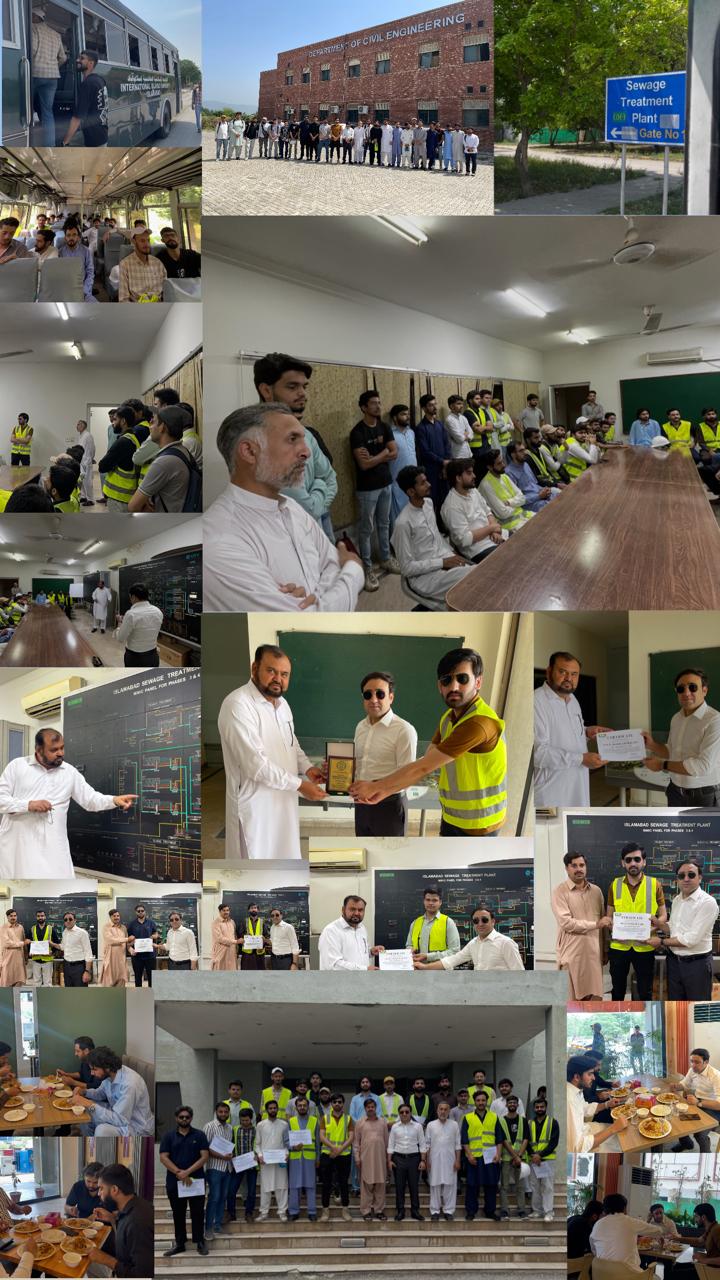
On 13th May 2026, we had the privilege of participating in a Study Tour to the Sewage Treatment Plant (STP), located in I-9/1, Islamabad, under the leadership of Engr. Habib Ahmad Jan, Lecturer at the Department of Civil Engineering, International Islamic University Islamabad. This tour was a mandatory field study for the 8th-semester students as part of our academic curriculum.
As per the Pakistan Engineering Council (PEC) guidelines, this study tour was essential to bridge the gap between theoretical knowledge and real-world engineering practices. The primary objective was to observe how wastewater treatment processes are implemented in practice, concepts that we had studied in theory during our Environmental Engineering-2 course.
Presentation and Briefing:
The tour began with a comprehensive presentation by Muhammad Musa, Assistant Director at STP, CDA. In his session, he provided a detailed explanation of how the wastewater treatment works at the plant. He covered key aspects such as:
• The background and operational capacity of the STP
• The regulatory framework governing wastewater treatment in Islamabad
• Key processes involved in sewage treatment, including primary, secondary, and tertiary
treatments
• Effluent quality standards, environmental impact, and disposal of treated water
• Challenges faced in operating a large-scale sewage treatment plant
After the presentation, we had an engaging Q&A session where we asked in-depth questions regarding the treatment processes, plant operations, and the challenges involved. Muhammad Musa answered all our queries with great clarity, deepening our understanding of real-world wastewater management.
Field Visit:
Following the briefing, we embarked on a detailed field visit through the plant, where we witnessed firsthand how each phase of the wastewater treatment process functions. We explored various stages of treatment, including:
• Inlet Works (Bar screening, grit removal, and flow measurement)
• Primary Sedimentation Tanks (Settling of suspended solids)
• Aeration Tanks (Biological treatment via the activated sludge process)
• Secondary Clarifiers (Separation of treated water from biological sludge)
• Sludge Handling Units (Thickening, digestion, and dewatering of sludge)
• Effluent Polishing and Disinfection (Chlorination and quality testing)
• Laboratory Facilities (On-site water quality analysis and monitoring)
At each stage, the technical team at the plant provided in-depth explanations of the equipment, processes, and maintenance requirements. It was a valuable opportunity to observe the practical application of environmental engineering principles in real-world settings.
Appreciation and Souvenir Exchange:
At the conclusion of the tour, we expressed our appreciation to the plant authorities by presenting them with a souvenir shield, recognizing their outstanding hospitality and technical guidance. Muhammad Musa and his team were also presented with appreciation certificates for their support and for making the visit an educational and enriching experience.
Conclusion:
This Study Tour to the Sewage Treatment Plant (STP) was an invaluable learning experience that allowed us to see the practical application of the concepts we’ve learned in the classroom. It enhanced our understanding of environmental engineering and provided insight into the real-world challenges engineers face in wastewater management. This tour successfully bridged the gap between theory and practice, leaving us with a deeper appreciation for the field of environmental engineering.
Leave a Reply