
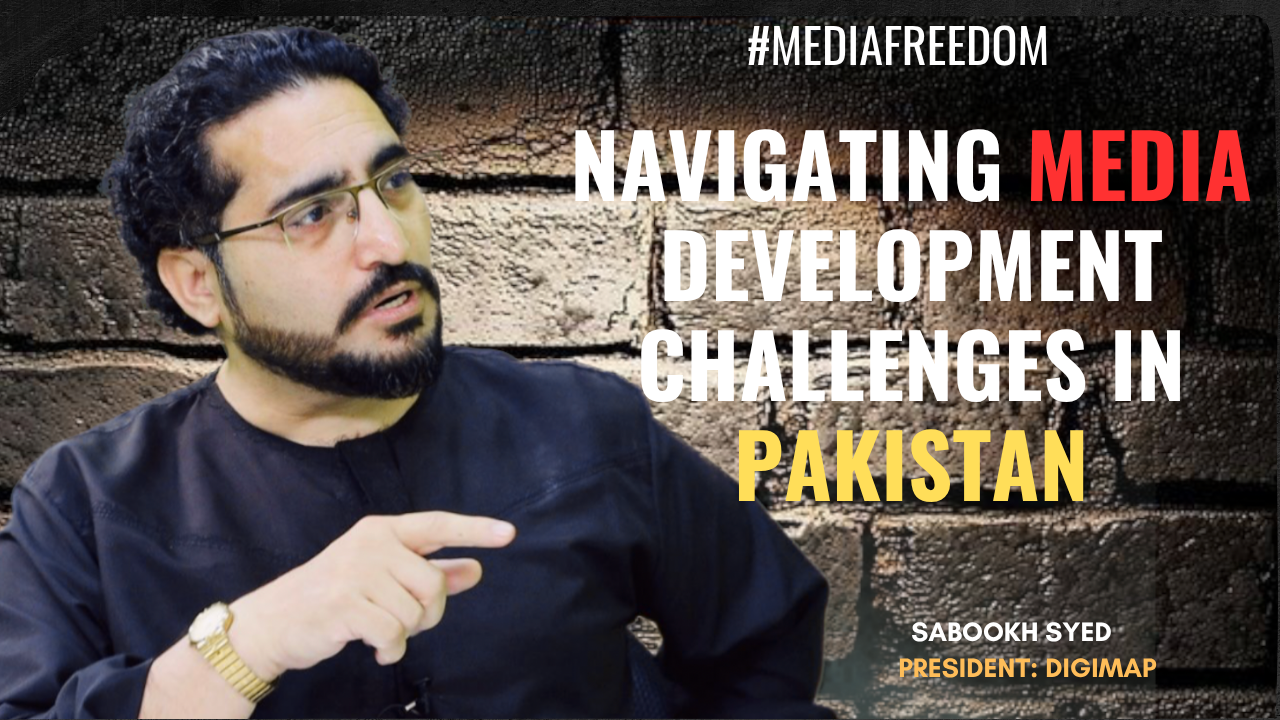

The story of media in Pakistan is one of paradox—unprecedented growth alongside shrinking freedoms, rising voices amid deepening silences. As President of the Digital Media Alliance of Pakistan, I have worked closely with journalists, regulators, tech platforms, and civil society actors across the country. From newsrooms in Islamabad to regional radio stations in interior Sindh, I have witnessed how the struggle for ethical, sustainable, and free journalism continues under daunting odds. This paper highlights ten pressing challenges confronting Pakistan’s media ecosystem—each rooted in ground realities and informed by extensive professional engagement.
1. Political Influence and Censorship
Political influence remains the single most corrosive force in Pakistani media. Pressure from state institutions—including the military and intelligence apparatus—alongside political parties, often forces media houses into subtle or overt forms of compliance. In 2024 alone, multiple television channels were taken off-air or fined for covering politically sensitive issues. Journalists reporting on Balochistan, missing persons, or civil-military relations face digital surveillance, threats, or worse—enforced disappearances. Self-censorship, once an exception, is now normalized.
2. Legal and Regulatory Pressures
The regulatory framework is increasingly used as a punitive instrument rather than a protective one. The Prevention of Electronic Crimes Act (PECA), originally drafted to combat cybercrime, has been repeatedly invoked to arrest journalists and silence dissent. The Pakistan Electronic Media Regulatory Authority (PEMRA) operates without transparency, issuing show-cause notices or suspensions without due process. Journalists, especially those working in digital media, lack access to legal counsel or institutional protection when under pressure.
3. Safety and Security of Journalists
Pakistan consistently ranks among the most dangerous countries for journalists. From Karachi to Khyber, we have documented dozens of cases of harassment, assault, kidnapping, and targeted killings of media professionals. Threats come not only from non-state actors and extremist groups but also from elements within the state. In my capacity with the Alliance, we’ve responded to multiple safety alerts and provided assistance to journalists forced to go underground. The lack of a national safety mechanism remains a glaring gap.
4. Financial Sustainability of Media
The business model of journalism in Pakistan is broken. Government advertisement, disproportionately awarded to ‘compliant’ media houses, has become a tool of patronage and punishment. Independent digital outlets struggle to access ad revenue, e-payment gateways, or subscription models due to outdated regulations and limited market confidence. Regional and community media—essential for linguistic and local diversity—are severely underfunded and often collapse without donor support.
5. Digital Transformation Challenges
While audiences are moving online, many media organizations are stuck in analog mindsets. There is an urgent need to invest in training journalists in multimedia reporting, digital ethics, data journalism, and content distribution strategies. At the Digital Media Alliance, we’ve trained over 500 journalists in the last two years on these skills, yet the demand far exceeds capacity. Algorithmic bias on global platforms also means that Pakistani content is often underrepresented or suppressed.
6. Disinformation and Fake News
Disinformation—both state-backed and foreign-sponsored—is polluting Pakistan’s information environment. Coordinated campaigns on social media are used to discredit journalists, spread propaganda, and incite polarization. While fact-checking initiatives have emerged, their reach remains limited due to lack of resources and public awareness. The absence of digital literacy among large sections of the population allows fake news to travel faster than truth.
7. Lack of Diversity and Inclusion
Pakistan’s media is still dominated by male, urban, and majority voices. Women, religious minorities, people with disabilities, and rural populations are either invisible or tokenized in news coverage. As an advocate for inclusion, I have consistently raised this issue with both public and private media houses, yet progress remains slow. Gender-based harassment in newsrooms, lack of promotion for minority journalists, and limited support for regional language media continue to be systemic problems.
8. Weak Media Literacy Among Public
Most Pakistani citizens are not equipped to critically engage with media content. Sensationalism, conspiracy theories, and political propaganda often go unchallenged. The educational system lacks a structured media literacy curriculum, and civil society efforts remain localized and under-resourced. As part of our Alliance’s outreach efforts, we have piloted digital literacy workshops in schools and madrassas, but scaling these nationally requires state support and political will.
9. Decline in Editorial Independence
Corporate capture of the media has diluted editorial integrity. Media owners with political affiliations or business interests often compromise the newsroom’s autonomy. Public interest journalism is increasingly replaced by ratings-driven infotainment. Investigative journalism—crucial for accountability—is rare, underfunded, and often discouraged. Even among digital media start-ups, few are truly independent in their funding and governance structures.
10. International Pressure and Opportunities
Despite domestic challenges, international actors continue to play an essential role. Global watchdogs like RSF and CPJ keep Pakistan’s press freedom violations in the spotlight. International donors support training, safety mechanisms, and digital innovation—but often with short-term funding and limited localization. What’s needed now is a shift from donor dependency to sustainable collaboration, where local media organizations co-design and co-own solutions.
Recommendations: Building a Resilient Media Future
To strengthen Pakistan’s media development ecosystem, a multi-pronged strategy is essential:
Legal Reforms: Amend PECA and PEMRA regulations to ensure freedom of expression and due process.
Journalist Safety: Establish a national mechanism for journalist protection, with independent oversight.
Public Funding for Public Interest Media: Allocate non-partisan state support to investigative and regional journalism.
Digital Innovation Grants: Provide funds and infrastructure support to digital media startups, particularly outside major cities.
Curriculum Reform: Introduce media literacy modules in schools and universities.
Inclusive Media Policy: Set quotas and incentives for gender, linguistic, and minority representation across media platforms.
International Partnerships: Prioritize capacity-building partnerships over donor-dependency by empowering local journalism networks.
Conclusion
Pakistan’s media is at a crossroads—caught between resilience and repression, innovation and inertia. As President of the Digital Media Alliance of Pakistan, I remain convinced that meaningful reform is not only possible but necessary. We need a media ecosystem that is free, diverse, and digitally literate—one that serves the public interest rather than political power.
Only then can media truly fulfill its democratic role as the voice of the people.
Leave a Reply