
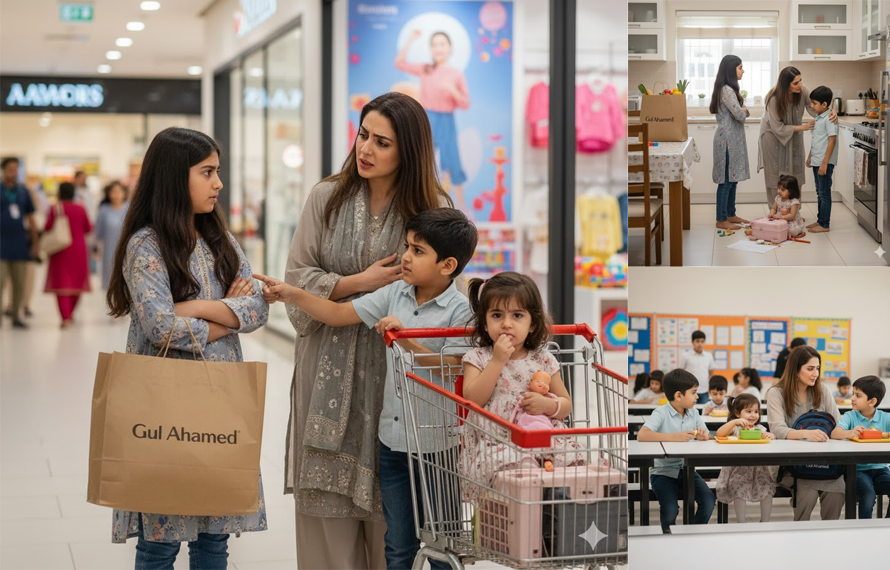

Sarah wakes up before sunrise every day. She’s a single mother, working as a teacher in one of the city’s top private schools. Her three children also study there, and because she works at the school, she gets some help with their fees. From the outside, people might think she’s lucky, her kids are in a top school, wear neat uniforms, and enjoy all the “modern” facilities every parent dream of.
But the reality is far from perfect.
Even with fee adjustments, life is not easy. School events, themed days, projects, birthday celebrations, they all quietly demand more money. Sarah stretches every rupee, sacrifices her own needs, and works extra hours just to keep up. She thought that giving her children everything would make them happy, but her efforts are only drawing them further into dissatisfaction.

Her kids complain constantly. “Why don’t we have the latest phone?” “Why can’t we go out like everyone else?” “Why is our life so simple?” They argue, question, and sometimes even disrespect her. Sarah tries to explain, but they don’t listen. The harder she works, the less satisfied they seem.
And it hurts deeply.
This struggle is not unique to Sarah. It’s the reality for millions of middle-class families today. Private schools, which were once just places for learning, now promote lifestyles alongside education. They encourage themed events, trendy activities, and competitions that push children to constantly compare themselves to others. Parents feel trapped; say no, and the child may feel left out or inferior, say yes, and they are drowning in fees, stress, and social pressure.
Where do parents go wrong?
Many confuse love with giving. They think that buying every gadget, every branded item, or fulfilling every demand will create happiness and respect. But happiness doesn’t come from things, and respect cannot be bought with money. Without proper guidance, without upbringing, children learn to demand, to compare, and to take for granted what they have. They grow up entitled, restless, and dissatisfied.
Even with all the luxuries and opportunities, children can feel unhappy and disconnected. They argue constantly, do not respect limits, and often forget the sacrifices their parents make quietly every day. In trying to give them the best, we sometimes forget to teach the basics: patience, gratitude, empathy, and respect.
Read More: The Silent Chainsaw: Can a Sapling Replace a Giant?
This problem is bigger than schools or fees. It is about a culture that confuses material provision with love. Proper upbringing, the lessons of discipline, values, and character, are being replaced by indulgence. Children learn that life is about possessions, appearances, and keeping up with peers, instead of understanding effort, sacrifice, and responsibility.
Even children from wealthy families, who have every luxury, are not truly happy. They may wear the trendiest clothes, attend the most exciting events, and carry the latest gadgets, yet they feel restless, anxious, and emotionally distant. They may even resent the parents who work tirelessly to provide these things because they fail to understand the sacrifices behind them.
Middle-class families face this reality every day. Parents work long hours, juggle responsibilities, and stretch resources to meet expectations. The result is fatigue, frustration, and emotional strain. And yet, the most important part of raising children, instilling values, character, and respect, often gets neglected.
The truth is simple; children do not need everything we can give. They need guidance, emotional support, and lessons in life. They need to understand that happiness is not in comparison, consumption, or appearances, but in appreciation, effort, and love. They need to learn that respect is earned through behavior, not bought with possessions. They need to understand the value of sacrifices their parents make every day.
If even teachers like Sarah, working inside elite private schools with fee adjustments, struggle to raise happy, respectful children, then the problem is bigger than any one family. It reflects a society that has replaced values and emotional grounding with materialism and comparison.
Middle-class parents must pause and reflect. Sleepless nights, constant arguments, financial stress, and social pressure, these are struggles shared by millions. But the solution is within reach. Children do not need more things, more events, or more luxuries. They need presence, guidance, and proper upbringing. They need parents who teach patience, gratitude, empathy, and respect consistently.
Because at the end of the day, when children have everything but peace, respect, and emotional security, we must ask ourselves, what are we really teaching them?
Providing everything without guidance is not love. Exposure without grounding is not education. Indulgence without proper upbringing is not parenting. If children grow up understanding values, effort, and appreciation, then every sacrifice we make as parents will have been worth it, and childhood will remain a time of growth, happiness, and learning, not anxiety and dissatisfaction.
Leave a Reply