
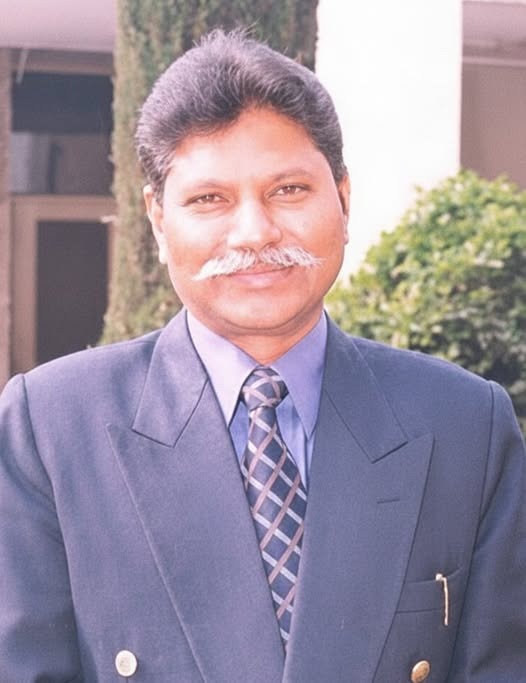
Rawalpindi has always been a city of literature, thought, and living dialogue. Its streets and neighborhoods have long borne witness to gatherings where words were not merely spoken but deeply felt, and ideas did not remain abstract thoughts but shaped attitudes and ways of life. Within this tradition, one gentle yet firm voice is that of Mehboob Sada, who quietly worked for humanism, harmony, and dialogue.
Mehboob Francis Sada, lovingly known as Mehboob Sada, was born on January 18, 1947, on the soil of Rawalpindi. His father, K. Francis, served in the British Army, while his mother, Sardara Bibi, was a dignified and courageous woman. She not only strengthened the foundation of her home through love and sacrifice but also instilled in her children the values of faith, service, and human compassion. Patience, resilience, and selflessness were prominent traits of her character. She was a mother who guided her children toward education while also teaching them that understanding the pain of others and standing with them is the true purpose of life. Her affection and guidance gave depth to Mehboob Sada’s personality. Through her prayers and practical example, she instilled in him the belief that society can be transformed through knowledge and love. She remained a constant source of encouragement for her son and played a quiet yet strong role in his achievements. Mehboob Sada belonged to a family with two sons and two daughters. This family background became the foundation of his personality, where values of service, sacrifice, and love deeply shaped his upbringing.
Mehboob Sada was an advocate of peace, a champion of interfaith harmony, and a respected Christian leader. The central idea of his life was simple yet profound: bringing human beings closer to one another. He did not reduce love to a slogan; instead, he embodied it in his daily life and actions. His personality stood as a shining example of how faith, love, and service can be combined to establish harmony and justice in society. His life teaches us that true leadership is the kind that connects hearts, reduces distances, and places humanity at the center of thought. He was a lamp in himself, whose light continues to illuminate hearts even today.
His inclination toward literature and poetry was evident from childhood. He was a sensitive-hearted poet, yet also active and responsible in practical life. After completing his education (BA, B.Ed, MA, M.Ed), he chose teaching as his profession. Even after attaining higher education, he consciously chose the path of an educator because, in his view, education was not merely a means of livelihood but a form of service to humanity. As a teacher, he did not simply teach the curriculum; he encouraged students to think, question, and respect others. His classroom combined knowledge with ethics, and he firmly believed that true education is that which refines character and brings people closer to one another.
There was a natural dignity in Mehboob Sada’s personality. His speech was gentle, his tone courteous, and his manner unpretentious. Wherever he went, he transformed disagreement into dialogue before it could turn into conflict. He believed that differences of religion, culture, and language do not create distance but rather opportunities for learning. He felt others’ pain as his own and understood the art of sharing joy.
His poetry and writings were an extension of this very thought. He did not use words for ornamentation but for connection. His verses became bridges that connected hearts and reduced misunderstandings. For him, humanity came first, identity second.
Mehboob Sada’s life reminds us that great work is not always done with noise. Sometimes a calm voice, a civilized conversation, and a sincere attitude are enough to lay the foundations of peace and love in society. He departed quietly, but his voice still echoes in hearts.
In 2001, Mehboob Sada was appointed Director of the Christian Study Centre, Rawalpindi, a position he held until his passing. Under his leadership, the institution became not only an educational center but also a platform for dialogue, research, and intellectual activity, bringing together people of different religions, cultures, and ideologies. Christian and non-Christian researchers, poets, writers, human rights activists, and religious leaders from across the country gathered there for seminars, workshops, and training programs that promoted intellectual and social harmony.
Mehboob Sada’s personality was a spiritual force for the institution. He viewed every gathering as an opportunity for dialogue and every meeting as the foundation of a new relationship. During his tenure, the Christian Study Centre launched several major interfaith harmony projects, including training programs for youth, awareness sessions for women, and literary and intellectual discussions in multiple languages.
As a poet and writer, Mehboob Sada was widely appreciated in Pakistan’s literary and educated circles. His poetry carried the fragrance of humanity, love, and tolerance. He did not see words merely as a means of expression but as a way to connect hearts and reduce distances. His independent thinking, gentle heart, tolerance, and practical approach endeared him to everyone he met.
Simplicity and selfless generosity were hallmarks of his character. He neither sought fame nor worldly grandeur. His true identity was his character, one that created ease for others and opened doors of love. His friends, students, and colleagues still testify that wherever Mehboob Sada went, an atmosphere of love, knowledge, and human compassion emerged.
His life stands as a clear example of how one individual, through thought, education, and action, can light the lamps of love, peace, and harmony in society. His memory remains alive today in the intellectual and literary circles of Rawalpindi and Pakistan, and his message serves as a guiding beacon for future generations.
Mehboob Sada’s life was a symbol of service, love, and harmony. His efforts were also recognized by the Government of Pakistan, which awarded him the National Cultural Award in 2003. This honor acknowledged his valuable contributions to peace, interfaith harmony, social and political awareness, youth guidance, education, and service to the Christian community.
He was not only a respected voice nationally but also internationally. He was associated with several institutions and networks, including:
Christian Writers Guild Pakistan
South Asian Christian Writers Association
World Federation of Interfaith Student Movement (as Vice President)
Association of Christian Institutes for Social Concern in Asia (as General Secretary)
Through these platforms, he promoted dialogue and research and worked to build bridges between different religions and cultures.
Mehboob Sada also served as a member of the Ministry of Education’s selection committee, where he played an active role in developing the ethics curriculum for non-Muslim students. With his guidance and practical involvement, ethics textbooks for grades one through twelve were prepared, which continue to teach students values of humanity, tolerance, and moral integrity.
His services are proof that an individual, through thought and action, can positively influence not only his immediate circle but society as a whole and generations to come.
Mehboob Sada also served for a long time as editor of the monthly magazine Shalom, where his editorials and columns reflected his patriotism and commitment to Christian minorities in Pakistan. He preserved his intellectual and creative journey in the form of books. His works not only reflect his poetry and thought but are also considered a valuable contribution to Urdu literature. These include:
Tareekh Ka Fareb (The Deception of History)
Fajr Ke Khawab (Dreams of Dawn)
Intikhab (Selection (a compilation of works by Christian writers))
Irtiaash (Ibrtishash (a reflective work for the younger generation))
These books highlight his creative consciousness and message of human compassion. In The Deception of History, he raised intellectual questions in the context of past and present, while Dreams of Dawn poetically presented symbols of hope, light, and a new morning. Selection is a comprehensive compilation of Christian writers’ works that carries forward the literary tradition, and Ibrtishash reflects the emotions, dreams, and intellectual growth of the younger generation.
These works demonstrate that Mehboob Sada did not limit literature to aesthetic expression but used it as a means to promote social awareness, humanity, and harmony. His writings still invite readers to think, feel, and view the world from new perspectives.
Mehboob Sada was a true patriot who devoted his entire life to equality, justice, and unity. He was at the forefront of movements against discriminatory laws and raised his voice through radio, television, newspapers, and books. Courage marked his speech, truth shone through his pen, and human compassion was evident in his actions. He was a man of strong faith, proud of his Christian values and identity, which he connected with social harmony.
His life was a beautiful blend of knowledge, spirituality, and humanism. He proved that education and dialogue can erase social divisions and create harmony among different religions and cultures. His personality itself was evidence that society can be made more just and peaceful through love and knowledge.
His wife’s name is Philomena Mehboob. Their relationship was not merely a marital bond but an example of deep companionship and partnership. Through life’s ups and downs, they supported one another and not only made their home a center of love and peace but also conveyed a message of service and harmony to society. Philomena Mehboob always stood by her husband’s mission, encouraging him and supporting him in practical ways. As a result, Mehboob Sada’s struggle did not remain limited to his individual self but became a family legacy.
The couple was blessed with four daughters and one son. Three daughters, carrying forward their father’s mission, are actively engaged in the field of education, imparting knowledge and ethics to the younger generation. One daughter is associated with a diplomatic channel, promoting dialogue and relationships at the international level. Their son, Souniel Mehboob, serves as Program Manager at his father’s institution, the Christian Study Centre, and is practically continuing his father’s legacy.
Thus, the relationship between Mehboob Sada and Philomena Mehboob stands not only as a symbol of a successful married life but also as a practical partnership that passed on love, education, and service from generation to generation. This family remains a shining example of how, when husband and wife walk side by side, their lives and legacy become a guiding light for society.
Mehboob Sada passed away on January 14, 2011, in Islamabad, but his memory remains alive. His legacy is not confined to books and institutions alone but lives on in the hearts of those whom he taught love, knowledge, and dialogue. His life is a guiding beacon for future generations, reminding us that humanity’s greatest capital is love and justice.
Mehboob Sada is no longer among us, but his name, his thought, and his achievements will always live on. His life teaches us to make it worthy of being seen. He was a shining example of a self-made individual whose charismatic personality influenced people across the world.
As Rabindranath Tagore once said:
“Death is not extinguishing the light; it is putting out the lamp because the dawn has come.
Leave a Reply