
Youth, built on ambition but bound by exhaustion, stands at the edge of quiet collapse
A generation built on hope now finds itself overworked, underheard and quietly fading behind screens and degrees. There is a stillness around Pakistan’s youth today, not of peace but of numbness shaped by constant striving and unseen deprivation. Beneath the surface of ambition lies an exhaustion that collapses dreams once held dear.
In conversations across digital spaces, a silent pattern emerges. Young people confess to feeling detached from themselves, burned out by expectations and the relentless pressure to keep going. Through short reflections shared on Instagram I asked a question that many silently live but seldom voice: What does exhaustion mean to a generation that was taught to dream big but lives in constant burnout? Responses poured in honest, raw and painfully familiar. “It’s like I’m just going through the motions,” one student shared. “Even when I rest, the guilt hits hard, like I’m letting everyone down.” Another student shared that she enrolled in B.Ed. just to keep herself busy, though she has no interest in it, a mix of boredom and frustration. Her words echo the quiet crisis of countless others who are mentally, emotionally and economically running out of breath.
This silent burnout is not an isolated condition, it is structural. Pakistan’s youth comprising nearly 64% of the total population (UNDP 2023) is living through an age defined by instability. According to the Pakistan Institute of Development Economics (PIDE), nearly 31 percent of educated youth in Pakistan are unemployed one of the highest rates in South Asia. Years of education no longer translate into opportunity but into fatigue. Rising unemployment, unpaid internships, short-term contracts or underpaid roles that fail to meet even basic living costs. It is a system that rewards endurance not innovation and punishes stillness as failure.
Anthropologically, this reflects a deeper shift in the meaning of work, identity and worth. The neoliberal belief that effort guarantees success has fractured under economic precarity and social stagnation. Many wake up tired and scroll through lives they wish they had and chase goals that no longer feel like their own. Every achievement feels smaller and every failure heavier. Digital spaces, once an escape, now amplify comparison and the cult of productivity. In a world demanding constant achievement, rest feels like rebellion and silence becomes a survival mechanism.
Unlike past generations who were conditioned to suppress discomfort through obedience and adaptation. To marry early, settle quickly and call endurance strength – today’s youth cannot be molded the same way. Earlier, emotional pain was dismissed as a phase, something that would “things will change.” But this generation carries sharper emotional intelligence, they feel its pain differently. Even in silence, they sense the weight of their pain. With greater emotional awareness they recognize their exhaustion yet find no safe space to express it. Even when they try to numb it the awareness lingers and the cycle of suppressed trauma quietly continues.
Behind the appearance of progress lies deep emotional fatigue. Friends drift apart not because of distance but because everyone is silently surviving their own chaos. The culture of constant performance has left little room for pause or reflection. Even small acts of rest or slowness are met with guilt a reminder of how deeply the idea of self-worth is tied to output.
Amid this exhaustion, an alarming exodus unfolds. The best and brightest are leaving not out of choice, but desperation. According to the Bureau of Emigration and Overseas Employment, more than 900,000 Pakistanis left the country in 2023 in search of stability and dignity. Those who remain are caught between loyalty and loss, trying to rebuild meaning in a place that feels increasingly hollow. Brain drain is not just about migration, it reflects a national fatigue a slow erosion of trust in the very systems meant to sustain collective hope.
What we are witnessing is not mere tiredness but a generational burnout rooted in uncertainty. Burnout among youth is not loud it is silent, private and deeply normalized. It hides behind cheerful posts, long study hours and polite smiles. The young are caught between expectation and erosion between ambition and the slow grief of unmet potential. They are not lazy or apathetic, they are exhausted from running in a race where the finish line keeps moving.
In a society that rarely changes for those it exhausts, offering solutions may seem futile. Yet awareness itself becomes an act of resistance to speak, to recognize and to name what has long been ignored. Understanding this burnout is not about fixing the individual but about confronting a culture that normalizes exhaustion as purpose and silence as strength.
If this silence continues, burnout will not remain a private struggle, it will shape the country’s social and cultural fabric. The pressure to secure respectability through degrees, stable jobs and marriage is immense. A future built on disillusioned youth cannot sustain collective progress. What is needed is not just more jobs or degrees but spaces that value rest, purpose and emotional well-being as essential forms of productivity.
Until then, Pakistan’s youth will keep scrolling, striving and surviving not because they carry
a fragile hope, yet stopping feels like a luxury they cannot afford.
Mishaal Adeel Ajaz
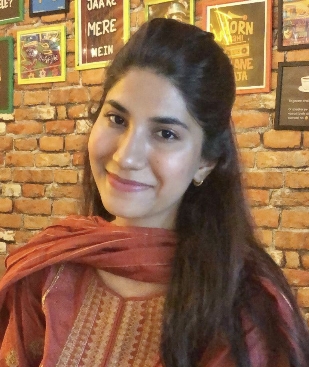
The writer is an MS Applied Anthropology student at Bahria University, Islamabad, exploring social and cultural issues affecting youth today.
Leave a Reply