
“Seeing Something Once is More Powerful than Hearing about it a Hundred Times.”
From the moment the pilot announced, “We’re about to land at Urumqi International Airport,” I felt Xinjiang’s warm embrace. Stepping off the plane, the enthusiasm of our hosts was palpable—Volunteers holding banners, eager smiles, open arms. That feeling of welcome lingered as we arrived at the hotel,the program handbook has a main title on it “Discover the SCO- Explore Magnificent Xinjiang” this program handbook quietly spoke of the care behind every detail. Punctuality and organization weren’t just traits—they were gestures of respect, making us feel deeply valued.
as a media student I had a chance to learn about SCO and its policies towards bringing peace in this Region (here explain about SCO Struggle to bring peace harmony and encountering terrorism) but here I decided to see and feel beyond the headlines and stereotypes of today’s elite media related to Xinjiang.
We Were Witnesses to Global Unity.
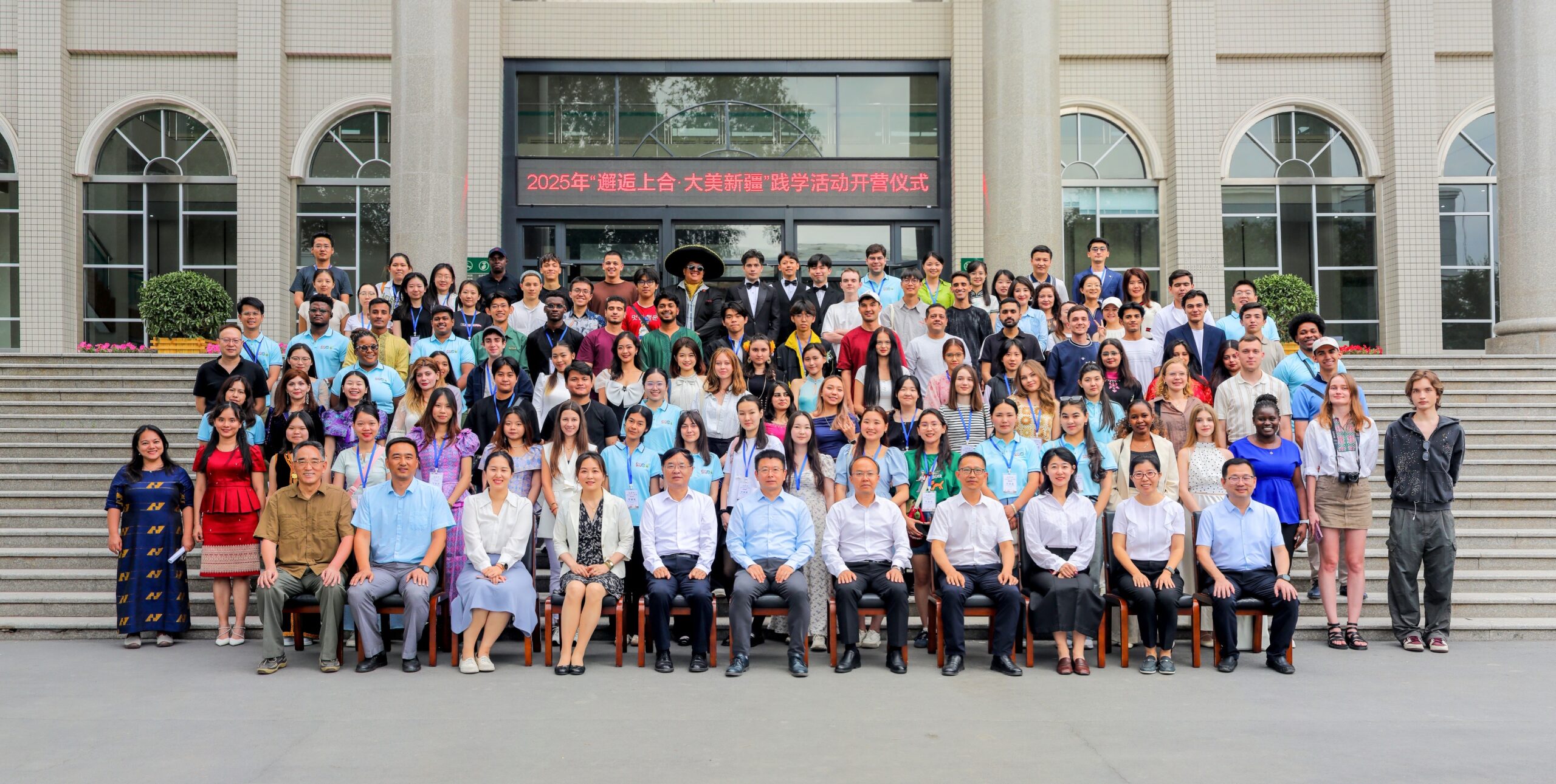
Sitting in the auditorium at Xinjiang Agricultural University, I realized that under the banner “Discover the SCO: Explore Magnificent Xinjiang,” we were not mere participants—we were witnesses to global unity. One hundred young minds, diverse and vibrant, looked back at me with curiosity and ambition. The speeches from regional leaders echoed sincerity; every word felt like a gentle promise—that China believes in youth, cross-cultural friendship, and shared dreams. Then came the music: dancers in flowing, radiant costumes moved with grace, weaving peace into every gesture. Their performance was an invitation, their collective energy a bridge to our souls. My wife and I often marvel at fresh produce in Chinese supermarkets—but now I understood the journey behind that freshness. At the Niuzhizhu Agricultural Demonstration Zone and Huier’s smart cotton fields, I watched sensors and drones tending to crops with precision. Farmers guided machines and fields whispered productivity. We exchanged knowing looks—we were witnessing harmony between tradition and innovation. It felt humbling and inspiring to see how innovation cultivates both food and pride. Later, at Xinjiang Xiaochu Food Co. and along Changji Food Street, we saw the same devotion in action: chefs and producers committed to hygiene and taste, forging food that connects land to people with honesty.
Stepping into History’s Heartbeat
Entering the Xinjiang Uyghur Autonomous Region Museum felt like stepping into history’s heartbeat. Artifacts whispered ancient stories—from Silk Road traders to Uyghur ancestors—preserved in a striking mountain shaped building that itself seemed part of the landscape. Every display was thoughtfully curated; the care and pride the government takes in protecting this heritage was clear. Wandering those halls, I felt rooted in time, humbled by the generations that shaped this region. At lunch in the historic Xinjiang Borderland Hotel, founded in 1973 and later honored as a national port hotel, the meals became more than food—they became memories. The rich aroma of pulao, the fragrant steam rising from a perfectly roasted leg of mutton, the meticulous presentation—it all spoke of hospitality. Biting into that tender meat, flavored with spices and love, I realized that here, meals are a language of warmth, made for the soul.
The Grand Bazaar of Urumqi: A living Mosaic
The Grand Bazaar in Urumqi was not just a market—it was a living mosaic. Soaring domes and mosque silhouettes framed a world of languages, colors, scents, and laughter. I locked eyes with children weaving baskets, vendors sharing spices with smiles, elders telling stories—every face a testament to unity. Walking through the Bazaar, I felt part of something larger, part of a story that placed peace and harmony center stage. The energy pulsed through me—cultural diversity in peaceful coexistence.Visiting “Xiamen Village” and the Karez Folk Customs Park brought me close to ingenuity rooted in resilience. I traced the ancient underground water channels—Karez wells—built centuries ago to nourish fields in arid land. Vineyards spread out under the same sun that once powered this ingenious system. An elderly shopkeeper invited us in with generous slices of watermelon—sweet, cooling. His gesture felt like a bridge to my childhood: the same warmth, the same simple generosity. That moment made me feel truly connected, human to human.
Where Earth Remembers and Mountain Whisper
Standing on the ruins of Jiaohe—the 2,000-year-old earthen city, once a Tang dynasty political center—I felt presence in history. The sun-dried walls, the silent streets—they seemed to speak of empires past and lessons of endurance. I walked slowly among columns and gates, each step charged with awe. Here was evidence that the past still lives within the earth, that civilization can crumble yet echo endlessly.
Our last morning in TianShan’s foothills, at the Tiangeer Forestry Center, felt like a mountain lullaby. Gentle hills, grazing animals, villagers tending dairy farms—everything whispered home. My childhood memories mirrored the simplicity before me: the smell of grass, the soft bleat of sheep, the breeze carrying mountain air. Xinjiang’s landscape, pristine and generous, felt like a sanctuary: a princess on earth, quietly inviting us into her grace.
As I bid farewell to Xinjiang, I feel tears in my eyes and gratitude in my heart. Your valleys glow with life; your people shine with kindness; your history breathes with strength. I leave with sadness at parting—but also with a promise: I will return, to breathe your air again, to walk your fields again, to feel your soul again. Thank you for welcoming me, teaching me, and touching my heart so deeply. May Xinjiang’s beauty continue to thrive—for every heart willing to listen, for every soul brave enough to see.
Leave a Reply