

As the world marks Genocide Prevention Day on 9 December and Human Rights Day on 10 December, we are reminded that remembrance must lead to responsibility, and responsibility must lead to justice for every community, without exception. Dr. Rakhshinda Perveen shares her reflections for IBC.
Preamble:
These are some of my reflections on a subject that lies very close to both my heart and my mind. I present this submission with humility, knowing that for some readers it may be a reminder, for others new information, and for a few perhaps uncomfortably blunt. But truth, when spoken responsibly, sometimes takes that risk.
Before I begin, it is important to situate where I am speaking from. I am a recognized human rights and women’s rights activist. My work spans decades and, by temperament and conviction, I speak for all communities who have suffered regardless of identity, geography, or political convenience. This commitment has often led to the perception that I am “siding with the wrong sides.” I take that as a reminder that truth is rarely convenient, and activism should never be selective.
This brings me to an essential question: why memory matters and why truth matters even more. My reflections here attempt to respond to that. The term genocide was coined by Polish-Jewish lawyer Raphael Lemkin in 1944 in his book Axis Rule in Occupied Europe. He combined the Greek genos (race, tribe) with the Latin cide (killing) to describe the systematic destruction of national, ethnic, racial, or religious groups. The word was born from the horrors of the Holocaust, to give legal recognition to a crime long committed but unnamed.
Genocide should evoke shivers, moral clarity, and collective horror. Yet today, in the age of digital saturation, it risks becoming just another word dulled by overuse, stripped of its pain, consumed in real time and forgotten even faster.
My reflections are not about any current conflict. Not because those conflicts lack suffering, but because I refuse to engage in competitive victimhood or selective outrage. I am not seeking to join any global debate club. And I know too well that speaking freely about certain genocides can come with consequences. Still, honesty remains the minimum we owe to victims all victims.
Through years of study, activism, and lived encounters, I have stood at Anne Frank’s house in Amsterdam and felt the weight of the Jewish Holocaust. I have grieved for Kosovo as a young student watching the BBC. I have walked through the Holocaust Museum in New York to understand how hatred becomes an industry. During UN fellowships, I struggled to detach myself from the images of Rwanda a genocide acknowledged only after unbearable loss. I have followed the tragedies of Bosnia, Darfur, and the Rohingya, where Muslim communities were destroyed while the world debated terminology.
One lesson from this global pattern is unmistakable: genocide does not enter our conscience at the moment it enters history. Recognition comes late. Justice arrives slower. Healing takes generations. And silence is the most durable weapon of all.
The Wound I Carry — and the Story No One Tells
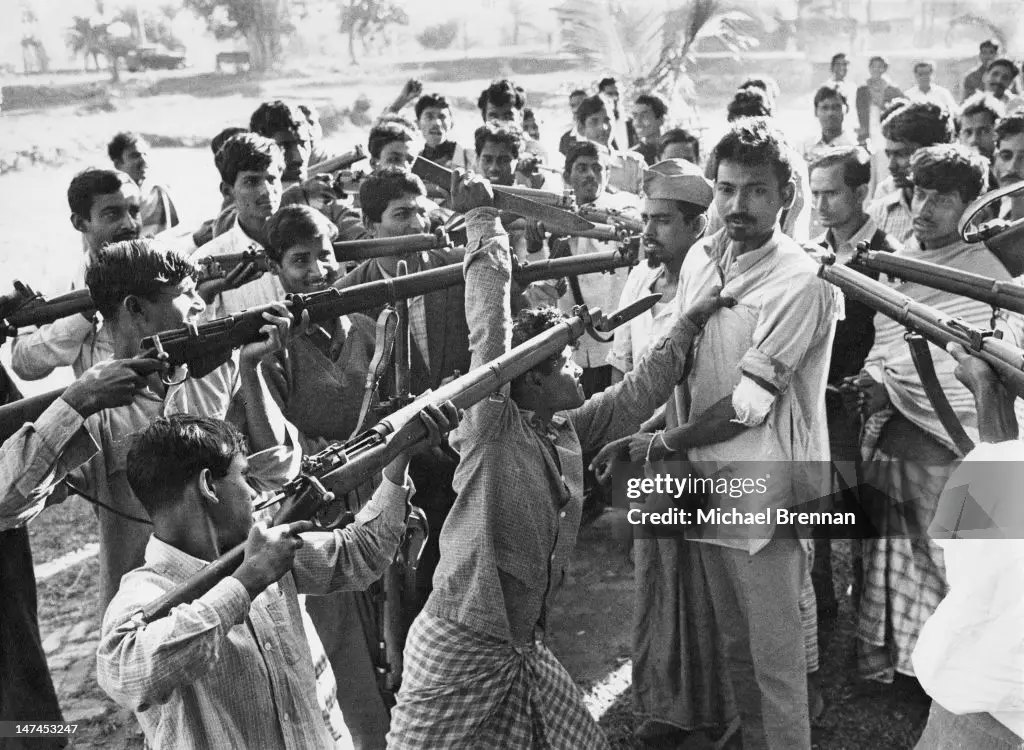
Amid this global landscape of atrocities, I return repeatedly to a story that has shaped my existence: the abandonment of my own community — the non-Bengali Urdu-speaking Biharis of 1971. Their story is rarely told. Their pain is rarely acknowledged. Their existence is often inconvenient.
In an article I titled “The Genocide No One Talks About,” I wrote about how this community has endured displacement, statelessness, humiliation, and erasure. Their suffering does not fit any comfortable narrative of 1971, yet it is real, documented, and ongoing. Families torn apart. Homes burned. Thousands killed. Women assaulted. Entire populations rendered stateless. For more than five decades, generations have lived in limbo unwanted by one country, forgotten by another.
To commemorate genocide sincerely, we must expand the circle of compassion. We must remember all victims not only the familiar ones, not only the convenient ones.
Justice, Dignity, and the Burden of Silence
When communities remain trapped in camps for decades… when children are born without citizenship… when survivors age without recognition… when their pain earns no memorials, no museums, no acknowledgment… we must ask ourselves: do we remember because it is fashionable, or because it is just? Silence, whether chosen or enforced, becomes complicity.
As diplomats, educators, civil-society leaders, and global citizens, we must insist on justice not only for victims recognized by history, but also for those history has abandoned. Selective empathy is itself a form of violence.
Healing Through Truth, Reconciliation Through Empathy
Truth does not weaken nations it strengthens them. Recognition does not destabilize societies it dignifies them. Reconciliation does not rewrite history it redeems it. Through writing, research, activism, and community engagement, I have seen how denial corrodes nations and how empathy, grounded in honesty, can begin to heal wounds once thought permanent.
Genocide is not only a historical crime. Its aftermath lingers in camp settlements, untold stories, inherited shame, and unresolved trauma. Honouring victims known and unknown means ensuring that no human being, no identity, no community is ever made invisible.
A Complicating Truth About 1971
There is a dimension of this tragedy that challenges common frameworks of understanding genocide. Most documented genocides involve a dominant majority targeting a vulnerable minority based on religion, race, or ethnicity. But the story I bring forward does not fit neatly into these categories.
In 1971, both sides saw themselves as Muslims. The Bengali Muslims Mukti Bahini fought for self-determination. The non-Bengali Urdu-speaking communities largely Biharis — saw the unfolding events as the dismemberment of the country they called home. When the new state emerged, they were recast as collaborators, stripped of citizenship, denied basic rights, and left in a state of permanent statelessness.
This layered tragedy Muslims persecuting Muslims, citizens criminalized for political stances, a community abandoned by both states is part of why their story remains unclaimed in official histories. It shows that mass atrocity does not always follow predictable lines. Sometimes divisions are shaped by language, class, migration history, or political identity. Sometimes victims are erased simply because their suffering complicates national narratives.
Remembering them broadens our understanding of atrocity. It pushes us to question the boundaries we place around empathy. It demands that justice never depend on narrative convenience. Their suffering is real. Their displacement is real. Their statelessness is real. Recognition is long overdue.
A Collective Call to Action
On this Genocide Prevention Day and International Human Rights Day (9th & 10th December 2025), I urge us to:
• Recognize and document every community’s suffering, especially those ignored or silenced.
• Challenge selective narratives and promote inclusive remembrance.
• Support citizenship and basic rights for stateless communities.
• Encourage critical scholarship and open dialogue.
• Build moral courage into institutions.
Prevention begins with memory. Prevention succeeds with courage.
A Message of Unity and Hope
Even as we recall humanity’s darkest chapters, I hold on to hope hope that recognition will widen, empathy will deepen, and justice will one day be impartial and universal. As I once wrote: we are all one. Memory remains but hope remains too. Love and justice both essential.
Let this day be more than remembrance. Let it be a pledge: a pledge to never let history forget; a pledge to honour every victim; a pledge to build bridges where walls once stood. May our collective conscience turn pain into purpose, memory into responsibility, and tragedy into commitment.
Dr. Rakhshinda Perveen is an internationally recognized intersectional feminist and published bilingual author whose work blends narrative and reflective nonfiction with autoethnographic elements. Her writing on 1971 and the plight of her community resists easy categorization. It is not memoir, though her family’s story runs through it; not academic history, though rooted in research and testimony; not pure activism, though every word demands action. It is a personal chronicle testimony, evidence, plea.
Follow her on Instagram @RakhshindaR
Download her books and reports from the website: drrakhshinda.mystrikingly.com
Leave a Reply