
Global politics currently stands at a strange crossroads. On one hand, the ongoing wars in Ukraine, Gaza, and the Middle East are shaking the foundations of the international order. On the other, major powers are carving out new paths for their interests under the banner of peace. In this context, Pakistan’s decision to join the “Board of Peace,” proposed by President Donald Trump, has ignited a fresh debate. In the world of diplomacy, certain decisions are not merely momentary; they define the future contours of a nation. Pakistan’s participation is one such move that cannot be categorized into simple boxes of ‘yes’ or ‘no.’ It is neither a result of emotional impulse nor a retreat under global pressure; rather, it is a manifestation of Pakistan’s growing diplomatic relevance, self-confidence, and a new global identity within a shifting world landscape. The real question is not just how effective this forum will be, but what Pakistan stands to gain or lose by being part of it.
A clear shift has been palpable in Pakistan’s foreign policy over the past few years. Islamabad is no longer confined to defensive or reactive diplomacy; instead, it is projecting itself as a balanced, responsible, and conciliatory state within the region and the Muslim world.
The recent joint announcement by the foreign ministers of eight Muslim nations Saudi Arabia, Türkiye, Qatar, Egypt, the UAE, Indonesia, Jordan, and Pakistan at the World Economic Forum in Davos and subsequently in Amman, makes it clear that this step was not taken in isolation. It is a calculated, consultative, and collective decision aimed at consolidating the Gaza ceasefire, supporting reconstruction, and advancing a political process for Palestinian self-determination.
Pakistan’s stance has been unwavering from the start: the Palestine issue is not merely a humanitarian one, but a matter deeply rooted in international law, UN resolutions, and the fundamental principles of justice. Consequently, Islamabad views its participation in this forum not as a military venture, but as a political and diplomatic opportunity. Pakistan has emerged as an influential voice in the Muslim world, one that is being heard from Washington to Beijing. Foreign Minister Ishaq Dar’s clarification—that Pakistani forces will not participate in any action aimed at disarming Hamas—reflects strategic depth. This is not just a statement; it is a red line Pakistan has drawn around its principled policy and military caution.
Pakistan’s inclusion in this “Board of Peace” is no coincidence. Following the tensions with India in May 2025, Islamabad has asserted itself as a responsible “Middle Power”—a country that not only knows how to defend its security but also possesses the potential to become a “Net Security Provider” in the region. Interestingly, the strategic balance in Washington also appears to be shifting. The relative decline in India’s regional premium in recent years, coupled with Pakistan’s re-emerging status in counter-terrorism, critical minerals, and regional diplomacy, has once again made Islamabad an indispensable partner.
Pakistan’s greatest diplomatic strength currently lies in its balanced foreign policy, which establishes it as a “bridge” between the Muslim world and global powers. It maintains deep strategic ties with Saudi Arabia, while Türkiye—a major power in the Muslim world—stands shoulder to shoulder with Pakistan. China, a proponent of quiet yet profound diplomacy, recognizes that the stabilization of Pakistan’s ties with Washington is in the regional interest, provided it does not undermine Beijing’s strategic goals. This very balance has turned Pakistan into a vital link between Saudi Arabia, Türkiye, China, Iran, and the United States—a link that no party can afford to ignore.
This role is particularly crucial regarding Iran. Islamabad would never want this forum’s direction to be turned against Tehran at any stage. In a recent meeting, the Iranian Ambassador spoke exceptionally high of Pakistan’s role. In this context, Pakistan will strive to use its position within the Board to block any adventurism that could lead to sectarian or new geographical tensions in the region. Pakistan’s presence acts as a safeguard, ensuring that the interests of Muslim nations remain paramount over any global agenda.
However, where there are opportunities, there are also risks. The biggest challenge remains Israel’s conduct. If Israel continues to violate the ceasefire and sabotages the concept of a Palestinian state, Pakistan’s presence on the Board could face scrutiny. Furthermore, this entire process is tied to the unconventional personality of President Trump. Pakistan has traditionally anchored its foreign policy in the UN’s multilateral system, especially on long-standing issues like Kashmir. If this new Board weakens the UN, Pakistan will have to vigorously defend its priorities.
Despite these concerns, joining this forum was a necessity of the hour. Had Pakistan remained on the sidelines, it would have lost the power to influence decisions. Today, Pakistan is at the table, where it can not only raise its voice for Palestine but also protect its national interests. This is an ordeal that will test Pakistan’s diplomatic foresight and political maturity.
In essence, Pakistan has attained the status of a “reformer” and a “balancer” in the Muslim world. It is no longer a country that merely issues statements; it possesses the capability to create consensus among diverse global powers. Pakistan’s participation in Trump’s “Board of Peace” is a calculated risk, aimed at leveraging its global importance for the national interest and the redressal of the oppressed Palestinians.
If Islamabad, alongside its allies, succeeds in asserting its voice through its traditional principled policy and a transparent mandate, this step will write a new chapter in Pakistan’s diplomatic ascent. The ball is now in the court of Pakistan’s diplomatic machinery to see how skillfully it navigates this tightrope to reach its destination.
_______________________________________________________
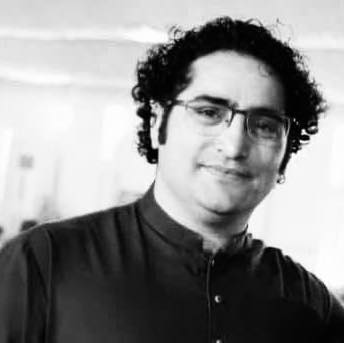
Sabookh Syed is a seasoned journalist, researcher, and socio-political analyst with extensive experience covering international relations and religious-political dynamics. A graduate of the University of Peshawar, he specializes in the intersection of Middle Eastern geopolitics and Pakistan’s foreign policy. He is widely recognized for his deep insights into the evolving diplomatic landscape of the Muslim world.
Leave a Reply