
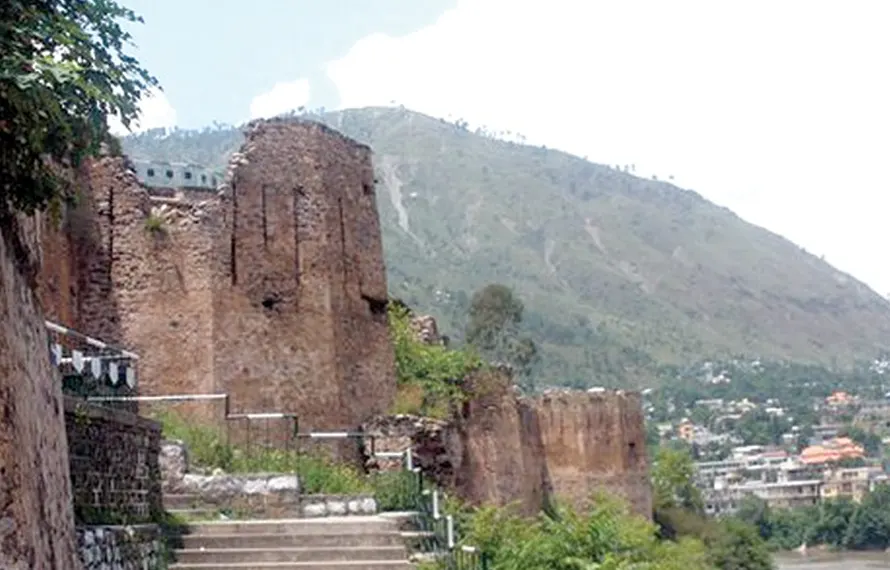

Azad Jammu and Kashmir, frequently celebrated as a paradise on Earth for its sprawling emerald forests, cascading rivers, and breathtaking valleys, holds a deeper, more profound allure within its ancient soil. Beyond its natural aesthetics lies a strategic crossroad of history, punctuated by defensive bastions built by successive empires. Standing proud at the vanguard of this cultural legacy is the historic Red Fort of Muzaffarabad, colloquially known as the Ratta Fort. Perched strategically on the banks of the Neelum River, this 450-year-old monument remains an enduring testament to the region’s architectural brilliance and turbulent military history.
The Architectural Genesis and Chak Dynasty
The foundations of this monumental defensive shield were laid in 1549 by the Chak rulers of Kashmir. During the sixteenth century, the borders of Kashmir were frequently destabilized by skirmishes between the local Chak forces and the expanding Mughal Empire. Recognizing the existential threat to the city and its populace, the Chak strategists selected a highly defensible peninsula where the Kishenganga (now Neelum) River naturally wrapped around three sides of the land. This left only a narrow terrestrial corridor to defend, effectively transforming the location into an impregnable stronghold.
Spanning an initial area of 59 kanals, the construction of the Ratta Fort showcases the sublime craftsmanship of sixteenth-century artisans. The builders uniquely utilized smoothly rounded river stones and specialized bricks, embedding them into thick defensive walls designed to absorb heavy impacts. Today, despite centuries of environmental degradation, these structural layers offer contemporary historians a clear window into the sophisticated military engineering of the era.
Imperial Transitions: Mughals, Durranis, and Sultan Muzaffar Khan
History altered the fort’s destiny in 1587 when the Mughal Empire successfully annexed Kashmir. With imperial attention shifting heavily toward securing outer frontiers in Kabul, Bukhara, and Badakhshan, the immediate military necessity of the Muzaffarabad fort waned. Consequently, the Mughals repurposed the grand structure into a royal transit residence, using it as an imperial outpost and rest house during their seasonal travels through the valley.
The fortress experienced a dramatic revival in its strategic importance during the Durrani era, when shifting regional alignments demanded a fortified stronghold in the region. The defensive layouts were reinforced, and extensive renovations were initiated. However, it was Sultan Muzaffar Khan—the visionary chieftain after whom the city of Muzaffarabad is named—who finalized the grand expansion of the fort in 1646, firmly cementing its status as the administrative and military nerve center of the valley.
The Dogra Era and Transition to Antiquity
The onset of the Dogra regime under Maharaja Gulab Singh and Maharaja Ranbir Singh brought renewed focus to the fort. Recognizing its geopolitical centrality, the Dogra rulers executed comprehensive structural restoration projects to maintain a firm administrative grip over the territory. Historical accounts indicate that the Dogra garrison ultimately evacuated the fortress in 1928, leaving the majestic structure locked and dormant for decades.
Following a prolonged period of abandonment, the site was formally handed over to the Department of Tourism and Archaeology of Azad Jammu and Kashmir. Recognizing its priceless heritage value, the department initiated emergency restoration works and opened its historic gates to the public, transforming the former military barracks into a sanctuary for history enthusiasts and travelers.
Natural Calamities and Modern Survival
The resilience of the Red Fort has been tested severely by the forces of nature. The devastating floods of 1992 and the catastrophic earthquake of 2005 dealt severe blows to the structural integrity of the complex, causing large sections of the ancient walls to collapse. Currently, while three vast courtyards remain intact, most of the historic residential chambers have succumbed to the elements, leaving behind solitary walls that overlook the river.
The subterranean architecture of the fort features an intricate network of prisons comprising eight reinforced chambers and dark solitary confinement cells covered by vaulted brick ceilings. The northern terrace once featured grand stone staircases leading directly down to the river bank, though much of this section has been eroded by the relentless currents of the Neelum. To mitigate further loss, a major protective retaining wall was constructed in 2010 when the river’s main current threatened to undermine the fort’s foundational base.
Despite centuries of geopolitical shifts, devastating earthquakes, seasonal floods, and periods of institutional neglect, the Red Fort of Muzaffarabad refuses to vanish from the cultural landscape. It continues to draw a steady stream of local citizens and international tourists who walk its historic courtyards to catch a glimpse of a bygone era.
A Critical Call for Action: The Path to Revival
While the Red Fort of Muzaffarabad remains an irreplaceable crown jewel of Azad Jammu and Kashmir’s cultural heritage, it currently stands at a critical historical crossroads. The lingering scars of catastrophic natural disasters combined with the slow, relentless erosion by the elements underscore a pressing reality: patch-work preservation is no longer enough. The Government of Azad Jammu and Kashmir, alongside the federal departments of culture and archaeology, must urgently step forward with a comprehensive, well-funded master plan for structural reconstruction and holistic restoration. Preserving this 450-year-old bastion requires more than mere protective walls; it demands a visionary commitment to rebuild its collapsed chambers, secure its subterranean architecture, and transform the site into a world-class historical park. By investing in the absolute revival of the Ratta Fort, the state will not only rescue a priceless monument from the brink of oblivion but also breathe new life into local tourism, ensuring that this magnificent symbol of Kashmiri resilience continues to inspire generations to come.
Leave a Reply