
If there is one political party that transformed the character, language, and style of urban politics in Pakistan, it is the Muttahida Qaumi Movement (MQM). More than just a political party, MQM emerged as a political phenomenon that gave millions of Urdu-speaking residents of Karachi and Hyderabad a sense of identity, representation, and political empowerment. Yet history teaches an enduring lesson: political parties that fail to adapt to changing realities eventually collapse under the weight of their own legacy.
Founded in 1984, MQM built its political foundation on the grievances of the Urdu-speaking population in urban Sindh. Issues such as inadequate representation in state institutions, limited employment opportunities, and the demand for urban rights strengthened its narrative. Within a few years, it had dramatically reshaped Karachi’s political landscape and established itself as an undeniable political force.
During the 1990s, however, Karachi’s streets became symbols of conflict rather than political activism. Political killings, targeted violence, kidnappings for ransom, extortion, and the presence of armed groups severely damaged the city’s economy and social fabric. Various political parties and state institutions blamed one another for the violence, while ordinary citizens bore the greatest burden. It is impossible to deny that this turbulent period left a lasting scar on Karachi’s identity.
MQM’s greatest strength was its disciplined organizational structure, committed workers, and extraordinary loyalty to its leadership. Over time, however, these very strengths became sources of weakness. When political parties revolve around personalities instead of institutions, internal dissent is suppressed, constructive criticism disappears, and opportunities for reform gradually vanish. This pattern increasingly became evident within MQM itself.
After 2013, security measures aimed at restoring law and order in Karachi significantly reduced crime. At the same time, however, MQM’s organizational grip steadily weakened. Party workers became fragmented, senior leaders chose separate political paths, and the party split into multiple factions. The events following 2016 further accelerated this fragmentation, weakening what was once regarded as Karachi’s “invincible political machine.”
Nevertheless, attributing MQM’s decline entirely to external factors would be an oversimplification. Every political party must ultimately account for its own shortcomings. When voters distance themselves from a party, leadership decisions, organizational weaknesses, diminishing public engagement, and the inability to adapt to evolving political realities all play significant roles.
Meanwhile, Karachi’s electorate has undergone a profound transformation. Today’s young voters are increasingly concerned with employment, water supply, public transportation, education, healthcare, effective local government, urban infrastructure, and transparent governance. While ethnic identity remains a political factor, it is no longer the sole determinant of electoral behavior. This shift is redefining the future of urban politics in Pakistan.
It must also be acknowledged that Karachi’s challenges cannot be attributed to the failures of a single political party. Persistent disputes between the federal and provincial governments over administrative authority, a weak local government system, unbalanced urban planning, rapid population growth, and poor institutional coordination have all contributed significantly to the city’s crisis. Karachi’s decline reflects a broader collective political failure rather than the shortcomings of any one party alone.
MQM has not disappeared from Pakistan’s political landscape. It still possesses a historic vote bank, experienced party workers, and decades of experience in urban politics. However, if it hopes to regain public confidence, it must move beyond personality-driven politics and embrace institution-building, internal democracy, youth leadership, transparency, and a performance-oriented political narrative.
Pakistan’s urban politics has entered a new era. Citizens now demand results rather than slogans, public service rather than identity politics, and effective governance rather than emotional rhetoric. These are the standards by which every political party will be judged in the years ahead.
The story of MQM is not merely the tale of one party’s rise and decline; it is also a reflection of the evolution of urban politics in Pakistan. It reminds us that while earning public trust is difficult, preserving it is even more challenging. Political power may be temporary, but the verdict of the people ultimately becomes the final verdict of history.
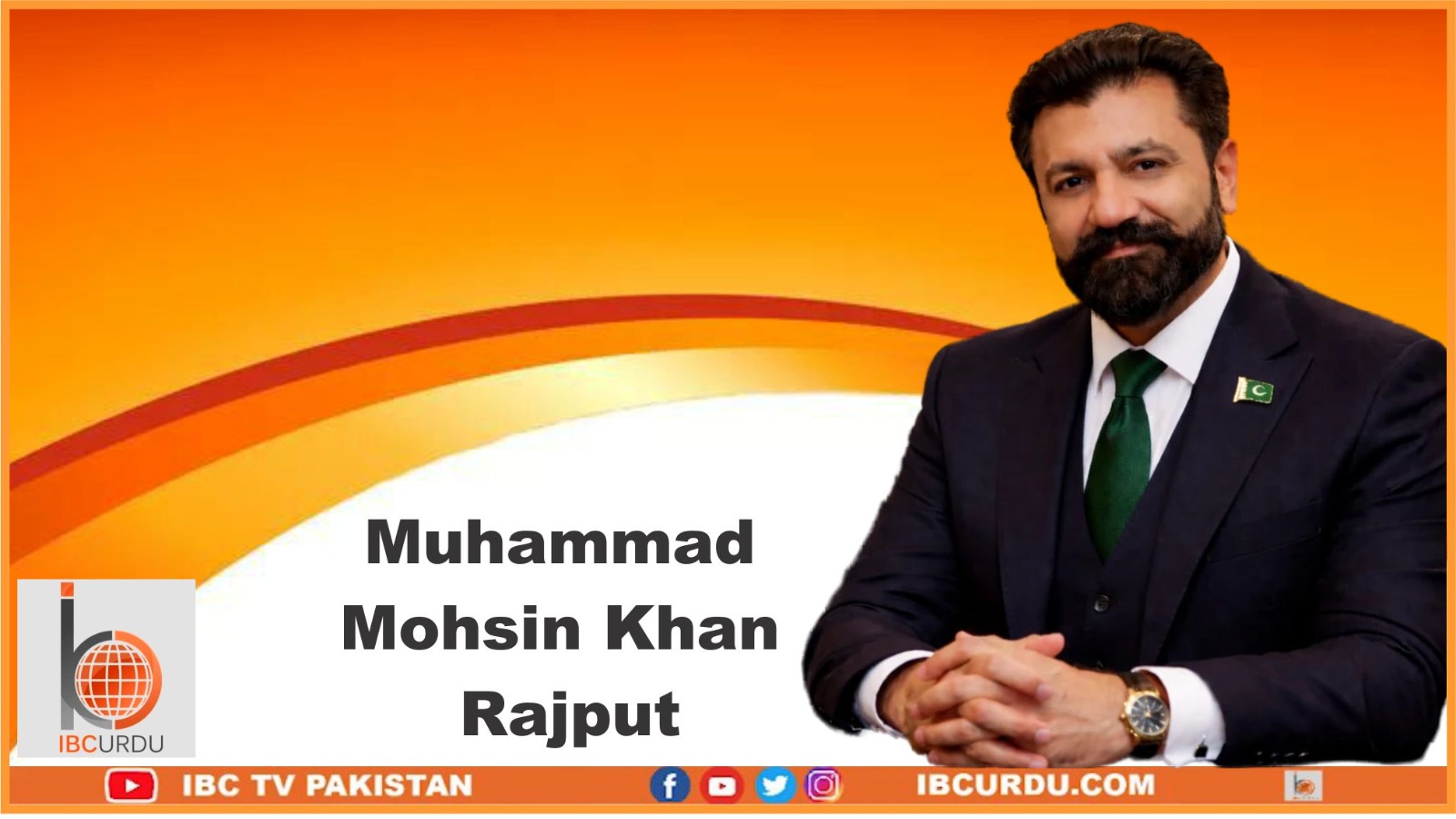
The columnist is the first elected President of the Pakistan Federal Union of Columnists and Creators (PFUC), Karachi Chapter.
Leave a Reply