
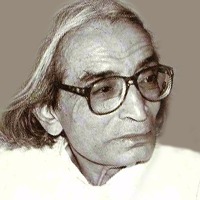

On June 11, 2004, Pakistan lost a voice of conscience, a principled journalist, and a chronicler of press freedom Zamir Niazi. He passed away in Karachi and was laid to rest at the cemetery located on Abu al-Hasan Isfahani Road. His loss marked the end of an era in which journalism was not just a profession but a calling rooted in truth, resistance, and unwavering integrity.
Born as Ibrahim Jan Muhammad Darvish on March 8, 1927, in Bombay, Zamir Niazi began his political consciousness during the Quit India Movement in 1942. At a young age, he found in journalism a means of expression and resistance. After the creation of Pakistan, he migrated to Karachi, where he began his career with the renowned English daily, Dawn. Over the years, he worked with several organizations including the evening paper Nai Roshni and Pakistan Press International. Eventually, he became associated with the Business Recorder, where he remained until his retirement in 1990.
Zamir Niazi is widely recognized as the first journalist in Pakistan to document the history of press freedom and censorship in the country. His landmark book Press in Chains, published in 1986, exposed the suppressive tactics employed against the media, particularly during the regime of General Zia-ul-Haq. With rigorous research and quiet courage, Niazi laid bare the structural and political limitations imposed on journalism. He followed this with two more significant works: Press Under Siege (1992) and Web of Censorship (1994), both of which delved deeper into the pressures faced by journalists and the extent of state control over information.
In addition to these, he authored several other important works, including Baghban-e-Sahra, Ungliyan Figar Apni, Hikayaat-e-Khoonchakaan, and Zameen Ka Noha—a collection of writings compiled in response to Pakistan’s nuclear tests. These publications remain essential reading for journalism students, media historians, and anyone committed to the cause of free speech.
In 1994, the Government of Pakistan honored him with the Presidential Award for Pride of Performance. However, the following year, when the government imposed a ban on six Karachi newspapers, Niazi returned the award in protest. In another principled act, he refused to accept an honorary doctorate from the University of Karachi because he was unwilling to attend a ceremony at the Governor House.
Zamir Niazi never sought fame or proximity to power. His resistance was quiet, yet profoundly impactful. He stood as a silent sentinel of truth, a man who chose conviction over comfort and legacy over luxury. His books continue to guide, educate, and inspire those who believe in ethical journalism and the sacred duty of bearing witness.
Though Zamir Niazi is no longer with us, his writings, his ideals, and above all, his conscience, live on. He reminds us that journalism is not merely about delivering news—it is about standing up for the truth, often at great personal cost. His life remains a beacon of light in the darkest of times—a torch that still burns for those who dare to speak out.
Leave a Reply