
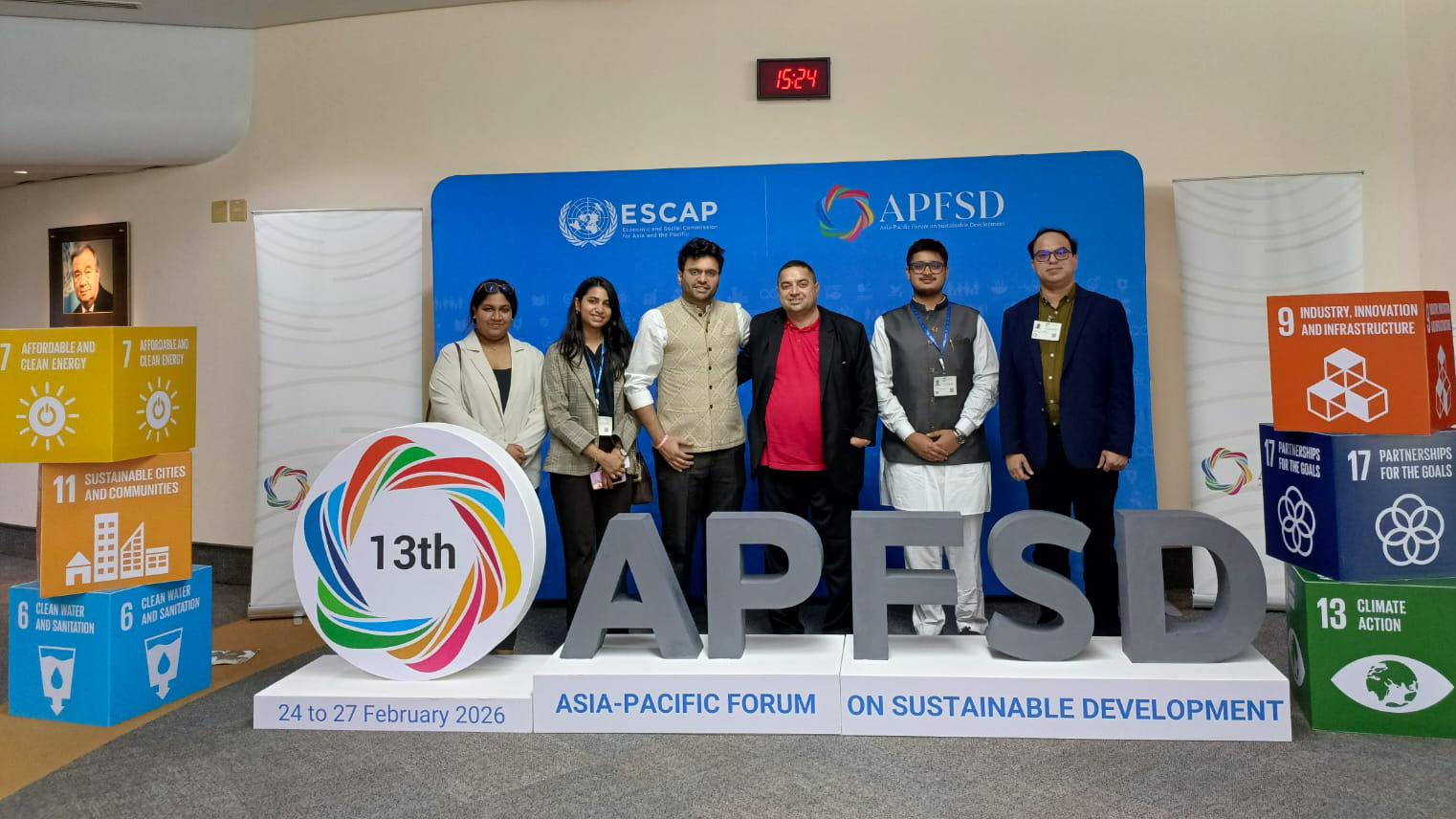
At the Thirteenth Asia-Pacific Forum on Sustainable Development in Bangkok, I was reminded of a hard truth: global policy spaces often talk about us, the Global South, without us. My presence there, representing Gravity Development Organization and the communities I work with in Pakistan, was not symbolic. It was political. Attending the Thirteenth Asia-Pacific Forum on Sustainable Development in Bangkok a yearly regional event organized by United Nations Economic and Social Commission for Asia and the Pacific (ESCAP), was more than a professional milestone for me, it was a responsibility. I represented not just myself, but the communities I work with through Gravity Development Organization in Pakistan.
As a feminist man, I do not claim to speak over women or marginalized communities. I speak alongside them, informed by years of working with young women, lower-caste communities, and climate-affected populations in Sindh. What I carried to APFSD were not just policy ideas, but lived realities that rarely make it into official statements.
My journey to this space has been shaped by learning and solidarity across movements. From engaging with grass root communities to policymakers, my understanding of development has always been rooted in justice, inclusion, and lived realities.
In Sindh, development is not an abstract concept, it is about survival. I have seen young girls drop out of school because there are no safe transport systems. I have worked with women who cannot access basic healthcare without permission from male family members. I have listened to stories of lower-caste women facing layered discrimination because of their caste, their gender, and their poverty. These are not isolated incidents; they are systemic failures.
At APFSD, I challenged this gap. I argued that sustainable development cannot be achieved without confronting power. It is not enough to talk about inclusion, we must ask: who is excluded, and why? Who gets to sit at the decision-making table, and who remains invisible?
Through my engagements, shaped by networks like Asia Pacific Forum on Women, Law and Development, AYNI Collective, and Asian-Pacific Resource and Research Centre for Women, I emphasized that feminist approaches are not optional, they are essential.
Feminism, in our context, is about redistributing power, challenging structural injustice, and centering those who have been historically silenced.
One of the biggest lessons I took from APFSD is that the Global South is not lacking solutions, we are lacking recognition.
Across Asia-Pacific, communities are leading change. Youth are organizing. Women are building resilience in the face of crisis. But global systems still prioritize top-down approaches that ignore grassroots knowledge.
For Pakistan, the way forward is clear but difficult. We must move beyond token participation of youth and women and create real pathways for leadership. We must address caste as a structural injustice, not a cultural sensitivity. We must ensure that climate policies are shaped by those who are most affected, not just those in power.
My role, as I see it, is to act as a bridge, between communities and policy spaces, between local struggles and global platforms. But this cannot be an individual effort. Institutions, governments, and development actors must also be willing to shift power. APFSD was not just a forum it was a reminder that representation matters, but transformation matters more. If voices from places like Sindh are not shaping global agendas, then those agendas will continue to fail us. 13th APFSD 2026 reminds me that achieving SDGs is not a technical process, it is a political process. It requires redistributing power, listening to marginalized voices, and turning global commitments into local action.
If countries like Pakistan center justice, inclusion, and grassroots leadership, SDGs are achievable, if not, they will remain promises on paper. And that is why the Global South must not just be present, we must lead!
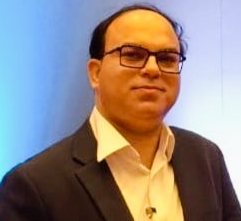
About Arshad Hussain Siddiqui:
He is a development practitioner focuses on amplifying marginalized voices particularly women, youth, and lower-caste communities in policy and development spaces across Pakistan. He can be access at qazi.arshad.siddiqui@gmail.com
Leave a Reply