
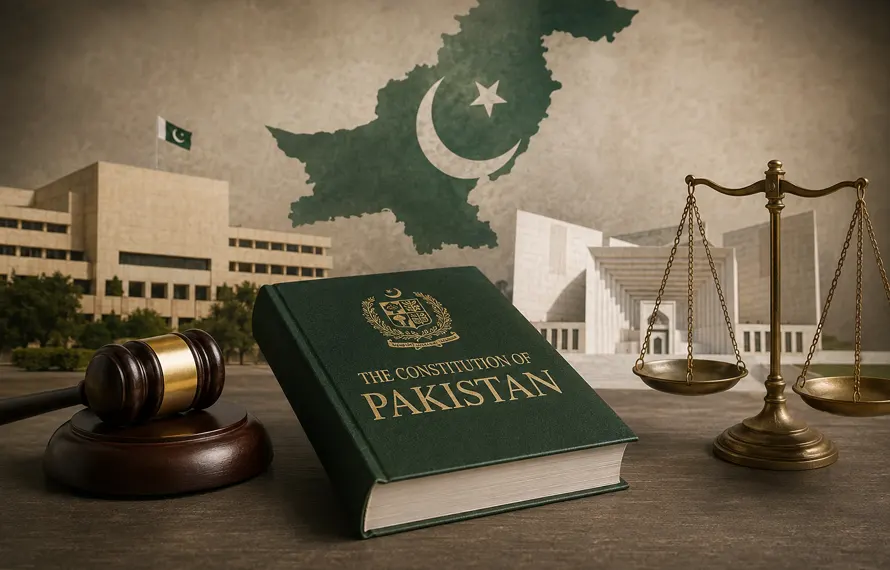

Every few years, Pakistan finds itself revisiting the same constitutional question: Would a presidential system solve our problems, or is the parliamentary system still the better choice?
I believe this discussion deserves more than slogans or emotions. It deserves a careful look at history, constitutional development, and the experiences of other countries.
The question is not simply which system is better. The more important question is why some countries succeed under one system while others struggle under the same model.
Pakistan Has Experienced Both Systems
Contrary to what many people believe, Pakistan is not unfamiliar with either model.
The country has experienced a presidential system under the 1962 Constitution, while the 1973 Constitution established a parliamentary democracy, where the Prime Minister heads the government and the President performs a largely constitutional role.
In other words, Pakistan has already tested both models in practice. Therefore, today’s debate is not about introducing something entirely new. It is about evaluating our own historical experience with an open mind.
Why Was the 1973 Constitution So Important?
The 1973 Constitution occupies a unique place in Pakistan’s constitutional history.
Unlike previous constitutional arrangements, it was adopted through broad consensus among almost all major political parties. At a time when the country was recovering from the trauma of 1971, political leaders chose dialogue over division and produced a constitutional framework acceptable to diverse political voices.
That consensus itself remains one of the Constitution’s greatest strengths.
Another remarkable aspect of the 1973 Constitution is its resilience. Pakistan has witnessed extraordinary political changes over the decades, including periods of martial law. Yet the Constitution continued to serve as the country’s constitutional foundation. While amendments and temporary changes were introduced at different times, its core framework ultimately remained intact. This reflects not only the importance of constitutional continuity but also the collective recognition that a stable constitutional order matters for every nation.
Is a Presidential System Always Better?
Supporters of a presidential system often argue that a directly elected President can make faster decisions, provide political stability, and complete a fixed term without depending on shifting parliamentary alliances.
There is some logic behind these arguments.
Read More: Saudi Arabia Announces Major Decision: Riyadh Air Launches Direct Flights to Pakistan
Countries like the United States have operated under a presidential system for centuries. However, it is important to remember that the success of the American model depends not only on its Constitution but also on strong institutions, an independent judiciary, effective checks and balances, and a deeply rooted democratic culture.
Without those safeguards, concentrating executive authority in one office can create new challenges instead of solving existing ones.
This is why constitutional scholars often remind us that institutions matter more than personalities.
Does the Parliamentary System Have Advantages?
The parliamentary system also has important strengths.
It generally encourages consultation, coalition building, and parliamentary accountability. Governments remain answerable to elected representatives, and provinces often have a stronger voice in national decision-making.
Countries such as the United Kingdom, Canada, Australia, Germany, Japan, and India have successfully operated parliamentary democracies for decades. Their experience demonstrates that parliamentary governance can deliver political stability when institutions are respected and constitutional norms are followed.
At the same time, parliamentary systems are not without challenges. Coalition politics, political polarization, and frequent government changes can sometimes delay decision-making.
Once again, the lesson is that the quality of governance depends less on the constitutional label and more on how responsibly leaders and institutions perform their respective roles.
One interesting observation from comparative politics is that successful countries follow different constitutional models.
Despite these differences, successful nations have one important characteristic in common: respect for constitutional institutions, rule of law, professional public administration, and policy continuity.
No constitutional design can substitute for these foundations.
I believe Pakistan’s constitutional debate should remain constructive rather than emotional.
Instead of asking whether a presidential or parliamentary system is inherently superior, perhaps we should ask a broader question:
How can any constitutional system function effectively without strong institutions, an independent judiciary, accountable governance, empowered local governments, constitutional continuity, and public trust?
History suggests that constitutional success is rarely determined by the name of the system alone.
It is determined by the willingness of all constitutional institutions to perform their respective responsibilities within the framework provided by the Constitution.
Pakistan has already experienced both presidential and parliamentary governance. History therefore offers valuable lessons rather than simple answers.
Meaningful constitutional discussions should always remain open, informed, and respectful. Every democracy benefits when citizens debate ideas through facts instead of assumptions.
Whether Pakistan continues with its parliamentary structure, considers constitutional reforms, or explores administrative changes such as additional provinces, the guiding principle should remain the same: national consensus, constitutional continuity, strong institutions, and the public interest.
After all, history repeatedly reminds us that good governance is not created by changing the name of a system. It is created by strengthening the institutions that make every system work.
Leave a Reply