
For years, we have quietly treated technical and vocational education as the second choice in Pakistan. Gilgit-Baltistan is no exception.
If a student gets good marks, the usual advice is simple: go for medicine, engineering, or the civil service. If the marks are not good enough, technical education is often presented as the next option. That mindset needs to change.
In a region like Gilgit-Baltistan, where there are no large industrial cities and where many young people live in small towns and remote valleys, skills can actually open more doors than another general degree. And with AI, automation and digital technology changing the job market so quickly, the old idea that a university degree automatically means a better career is becoming harder to defend.
For GB, technical education should not be the place where students end up because they could not get into something else. It should be one of the first choices for young people who want practical, independent and future-focused careers.
GB Has More Opportunities Than We Often Realise
Gilgit-Baltistan’s mountains can make life difficult. Long distances, rough roads, scattered communities and winter weather can make access to education and employment a challenge.
But those same mountains are also part of GB’s economic strength.
Think about hydropower, tourism, gemstones, agriculture, construction, renewable energy and the opportunities linked to the CPEC route. These sectors do not just need people with degrees. They need people who know how to do things.
They need electricians, solar technicians, mechanics, civil and construction technicians, surveyors, hospitality professionals, IT support workers, digital marketers, refrigeration and air-conditioning technicians, agricultural technicians and skilled tradespeople.
A hotel in Hunza needs trained hospitality workers. A hydropower project needs technicians. A modern farm needs people who understand irrigation, machinery and digital tools. A tourism company needs guides who can use online booking systems, digital maps, translation tools and social media. A construction project needs skilled electricians, plumbers, masons, surveyors and machine operators.
These are not abstract opportunities. They are connected to the economy GB already has.
The basic foundation is already there. The Directorate of Technical Education and Skills Development (DTESD) runs technical and vocational institutes, including the Government Vocational Training Centre in Gilgit, which is moving toward Centre of Excellence status with support from the TVET Sector Support Programme. Karakoram International University has also been in discussions with NUTECH Islamabad around skill-development centres in areas such as renewable energy, ICT and hospitality.
The building blocks exist. The bigger challenge is taking them beyond a few flagship initiatives and making quality skills education available across the region.
Why Do We Still Send the “Back Benchers” to Technical Education?
In many GB families, a child becoming a doctor, engineer or government officer is still seen as a major achievement. A young person becoming an electrician, solar technician, mechanic, chef, carpenter or digital technician rarely gets the same applause.
That is a social problem, not a skills problem. Parents naturally want the best for their children. But sometimes “the best” is defined by what was considered successful 20 or 30 years ago.
A young person from Ghizer or Diamer may spend years chasing a general degree and then return home without a clear job path. Another young person with a good technical skill may be able to find work, start a small business, work online, or build a career around the growing tourism, construction, energy or digital economy.
We also need to be honest about career counselling.
Many students do not really know what different careers look like. They choose subjects because their friends are choosing them, because relatives recommend them, or because that is what their school considers respectable.
AI Does Not Mean Hands-On Skills Are Finished
There is a lot of fear around AI. And some of that fear is justified.
AI is already changing routine office work, data entry, basic bookkeeping, routine drafting and parts of customer service, among others.
Someone still has to install a solar system. Someone has to maintain a micro-hydel plant. Someone has to repair electrical equipment. Someone has to operate and maintain machines. Someone has to troubleshoot a network. Someone has to work with irrigation systems, agricultural equipment and construction technology.
- This is where GB can think differently about technical education.
- The future technician will not simply be someone carrying a toolbox.
- Imagine a carpenter who can read a 3D design on a computer.
- An electrician who understands smart sensors and solar systems.
- A tourism professional who uses AI translation and digital mapping.
- A farmer who understands modern irrigation technology.
- A technician who can diagnose a machine with digital tools rather than relying only on experience.
These are the workers GB needs.
The real future is not “technical skills versus university education.” It is technical skills plus digital skills.
That combination could be far more powerful than either one on its own.
We Need to Make Skills Education Attractive Again
If we want talented young people to choose TVET, simply changing the curriculum will not be enough.
We need to change its image too.
Start with career counselling in schools. Give students real information about employment, earning potential and market demand. Let them meet successful technicians, entrepreneurs and skilled professionals from their own communities.
Then bring digital skills into traditional trades.
- A hospitality student should understand digital marketing and online booking.
- An electrician should learn about solar systems, smart technologies and basic digital diagnostics.
- An artisan should know how to photograph and market products online.
- A construction technician should be comfortable with digital design and modern surveying tools.
- A young person studying agriculture should have access to modern technology and data-driven farming techniques.
- And why not create competitive, merit-based technical diploma programmes—something closer to an “honours track” for skills?
Give these programmes scholarships, good equipment, strong teachers, industry partnerships and internships.
Make students feel that they are entering a serious career pathway, not being sent somewhere because they could not get admission to university.
GB Needs Its Own Success Stories
We also need to tell better stories.
There are young people from Hunza, Ghizer, Skardu, Astore, Diamer and Chilas who are building careers through technical skills, entrepreneurship and practical experience.
We need to put those stories in front of school students.
- A young electrician who built a successful solar business can inspire another student.
- A chef who started in a small kitchen and now works in a leading hotel can inspire someone from a remote valley.
- A technician working on a hydropower project can show students that technical skills can lead to a professional career.
- A young person running an online business from a village in GB can demonstrate that the internet has changed the meaning of “location”.
- These stories should be part of school counselling, social media, local newspapers and community events.
- Young people need to see people like themselves succeeding.
The Private Sector Has to Be Part of the Conversation
Government and development partners cannot do this alone.
GB’s private sector, tourism businesses, construction companies, telecom operators, energy companies, hotels, farms and entrepreneurs all have a role to play.
They know what skills they need.
Technical institutes should be listening to them when courses are designed and updated.
Institute Management Committees can become a useful bridge between training institutes and employers, helping institutes understand what businesses actually need and where graduates can find work.
The diaspora can also play an important role. Many people from GB are working in Pakistan and abroad in engineering, IT, hospitality, construction, healthcare and other professions.
Their experience, networks and investment can help modernise labs, mentor students and create links between GB’s institutes and the wider job market.
The Bigger Question: Does DTESD Have Enough Power?
This is where the conversation becomes bigger than individual training centres.
DTESD has an important role to play in shaping technical education in GB. But if we expect it to transform the entire sector, we also have to give it the authority and resources to do the job.
Other provinces have dedicated TEVTA-type bodies with legal powers, budgets and a stronger institutional role in technical and vocational education.
GB should seriously consider whether it needs a similar institution of its own.
A properly empowered GB TEVTA could have the authority to develop sector-wide policy, support and regulate institutes, strengthen quality standards, build industry partnerships and plan long-term investment in skills.
This is not simply about creating another government office.
It is about giving technical education a permanent place in GB’s development plans.
Instead of depending mainly on individual projects and donor-supported initiatives, GB needs a long-term system that can continue building skills even after a particular project ends.
That means proper funding, qualified instructors, modern equipment, updated curricula and clear links between training and employment.
There Is a Bigger National Opportunity Too
Pakistan’s policy direction is also moving toward skills, entrepreneurship and market-oriented training.
The National Youth Employment Policy launched in August 2026 places skills development, entrepreneurship and market-aligned training at the centre of youth employment, with a focus on areas including IT, AI, tourism and technical trades.
This creates an opportunity for GB.
Programmes such as the Prime Minister’s Youth Skills Development Programme, implemented through NAVTTC, can provide opportunities for GB’s young people and institutions.
But GB needs the capacity to make the most of these opportunities.
Good programmes will not automatically solve the problem. We need strong institutions on the ground that can connect national opportunities with local young people in Gilgit, Hunza, Ghizer, Skardu, Diamer, Astore and other parts of the region.
The Choice GB Has to Make
Gilgit-Baltistan is standing at an important point.
Our future depends on tourism, clean energy, agriculture, construction, technology, climate resilience and CPEC-linked economic activity. All of these areas need skilled people.
If we continue telling every bright student that success means becoming a doctor, engineer or government officer, we will leave many other opportunities unexplored.
And if we continue treating technical education as a dumping ground for students who did not get high marks, we will keep producing the wrong kind of graduates for the economy we are trying to build.
GB needs to change the conversation.
- A skilled technician should be respected as much as a graduate sitting behind a desk.
- A solar technician should be seen as part of the region’s clean-energy future.
- A skilled hospitality professional should be seen as part of GB’s tourism economy.
- A modern farmer should be seen as an entrepreneur.
- A digital technician working from a small town should be seen as part of the new economy.
- Our young people do not need to choose between working with their hands and using their minds.
The future belongs to those who can do both.
If GB can make technical education attractive, connect it with real jobs, bring AI and digital skills into traditional trades, involve the private sector and give DTESD the institutional strength it needs, the region can turn its greatest assets—its mountains, rivers, people and young population—into real economic opportunity.
The question is not whether GB has talented young people.
We have them.
The question is whether we are willing to give them the skills, opportunities and institutions they need to build the future here.
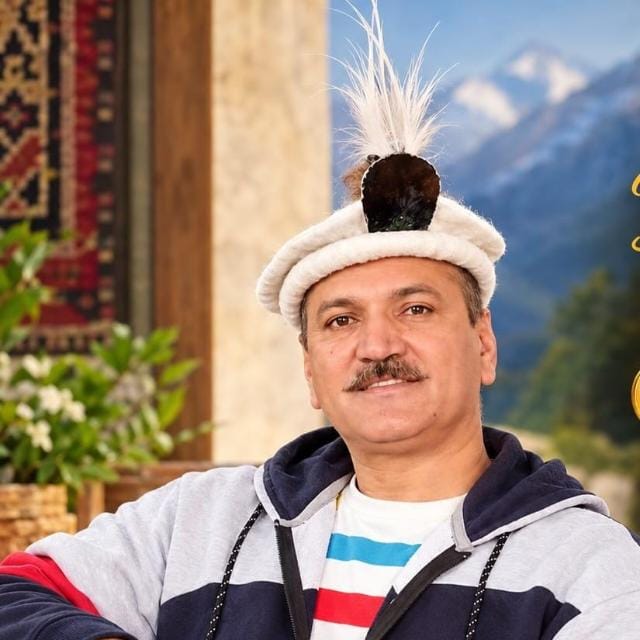
Sher Ghazi is a freelance writer and development-sector professional working with I-SAPS as Regional Expert for Gilgit-Baltistan. His work focuses on skills development, TVET, youth employment, education, institutional strengthening and development issues in GB.
Leave a Reply