
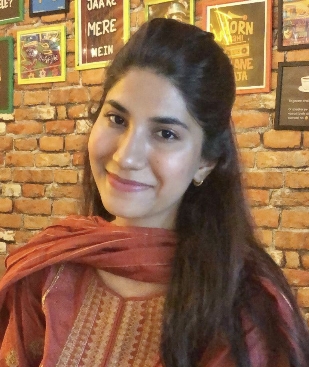
I am an anthropologist with a deep interest in documenting the social and cultural realities shaping youth in contemporary society. My work moves between lived experience and critical reflection, exploring themes of identity, digital cultures and evolving social dynamics.
Through my writing, I aim to make complex social issues both accessible and meaningful. I have authored several articles published in Pakistan’s renowned newspapers, where I offer perspectives that connect everyday experiences with broader cultural and structural questions.
Migration is never only a journey of movement. In its deepest form, it is a history written on the bodies of those who were forced to leave, those who were persuaded by illusion and those who crossed oceans without fully understanding what awaited them.
In From Ramnagar to Gandhi Village, migration is not presented as a neutral transition but as a lived experience shaped by labor, loss, endurance and the slow reconstruction of identity under extreme conditions.
From an anthropological perspective, migration is never a complete separation from the past. Instead, it creates a layered existence where old identities are carried, reshaped and re-expressed in new environments. The individual does not arrive empty but arrives with memory systems, cultural habits and symbolic attachments that continue to define who they are. These elements do not remain static; they evolve under new social and environmental conditions.
One of the most powerful aspects of migration is the way material symbols become carriers of identity. Soil taken from the homeland, for instance, is not merely a physical object but a condensed form of memory.
It represents belonging, ancestry and emotional continuity. Even when geography changes, such symbols preserve a psychological connection to origin. In this way, identity is not left behind but transported in symbolic form, continuing to influence how individuals understand themselves in new worlds.
Migration under the Girmit system was not a simple exchange of labor for opportunity but a structured form of displacement shaped by colonial power. Beneath the language of contracts lay a system where movement was controlled, return was nearly impossible and individuals were reduced to instruments of labor. Yet even within this structure, new forms of social belonging emerged, most notably the bonds of jahaji bhai or ship brotherhood, where shared suffering created a sense of kinship that replaced lost social worlds.
One of the most significant dimensions of this history lies in the structural nature of suffering. The plantation system did not only exploit individuals; it reorganized human life through institutional control.
This was a system designed to strip away the individual and replace them with a unit of production. Life in plantation spaces reflected this reality through overcrowded barracks, restricted autonomy, and constant surveillance. Yet even in these conditions, human relationships adapted. Old social hierarchies weakened under the weight of shared hardship and new collective identities began to emerge.
Cultural practices played a crucial role in this process of survival. Rituals, songs and language became vessels of memory, allowing displaced communities to maintain continuity with their past while adapting to new environments. These practices were not preserved in their original form but reinterpreted in response to lived conditions. Culture, therefore, did not disappear under pressure; it reorganized itself within it.
The transformation of identity became even more visible across generations. What began as lived experience of displacement gradually turned into inherited memory. The first generation carried the direct weight of separation, while later generations inherited a reconstructed sense of belonging shaped by storytelling, ritual and cultural adaptation. In this way, migration became not only a historical event but a continuing process of identity formation.
Within From Ramnagar to Gandhi Village, this layered experience is central. It shows that migration is not only about leaving a place but about the long and complex process of rebuilding life in its absence. Identity does not dissolve in this process; it is reassembled through memory, struggle and adaptation.
The fragrance of soil thus becomes a powerful metaphor for continuity. It represents the way memory persists even when geography changes. It is not nostalgia alone, but the lived presence of origin carried into new worlds. Soil in this sense is not just land, it is memory, suffering and survival compressed into symbolic form.
Ultimately, this history reveals that migration under colonial systems was not a smooth transition but a deeply uneven human experience marked by exploitation and endurance. Yet within that suffering, new forms of life emerged. Communities rebuilt themselves, identities transformed and memory survived in ways that could not be fully controlled.
And in that sense, the fragrance of soil never fades. It survives not because migration is easy, but because memory refuses to disappear even in the harshest conditions of history.
The more I learn about the systemic exploitation of the Indian and African diaspora, the more I value the quiet heroism of those who refuse to let the past remain buried. Among them is my aunt, Bhagwati Bhanu Dwarika, whose life carries the legacy of forefathers who endured displacement and hardship From a small village in Trinidad, she made her way to New York, pursued higher education and built a name in community development. Yet her journey is not defined by personal success alone. Even today, she remains committed to the welfare of people in Trinidad, giving back to the very communities shaped by that difficult past.
In her, I see continuity, a living reminder that history does not end with suffering but carries forward as strength, purpose and responsibility.
We are not only shaped by the past we inherit, but by the courage with which we choose to carry it forward.
Leave a Reply