
• Warns against activity at fortified nuclear site; IAEA reports new construction near damaged Natanz facility
• Tehran says its navy targeted unmanned US surface vessel in Hormuz
• Ship traffic in strait plunges as Iran widens restricted maritime zone
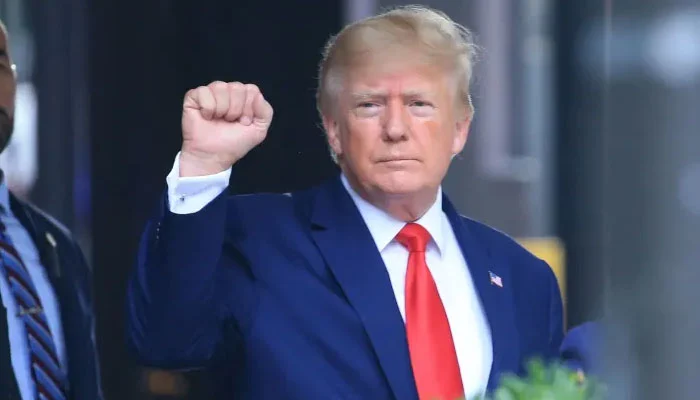
WASHINGTON: US President Donald Trump said on Wednesday the United States may hit Iran’s Pickaxe Mountain, urging Tehran to be cautious as the months-long war on Iran continues to escalate ahead of the midterm elections.
“We notice there’s a little activity at Pickaxe. I would advise Iran not to get cute because we will have to hit them very hard,” Trump said in a speech at the midterm Republican convention.
Pickaxe Mountain, located 140 miles south of Tehran and near the heavily damaged Natanz facility, is a fortified site with deeply buried tunnel complexes.
The International Atomic Energy Agency has observed construction activity at the Isfahan province site. The IAEA has not inspected the interior, but remote imagery indicated new movement, IAEA Director General Rafael Grossi told Bloomberg Television.
Trump has cited weakening Iran’s nuclear capabilities as one of his war objectives.
Meanwhile, Iran’s Revolutionary Guards said its navy targeted a US unmanned surface vessel in the Strait of Hormuz.
“The Navy of the Islamic Revolutionary Guard Corps targeted a Saildrone Explorer-type unmanned surface vessel in the Strait of Hormuz area,” the Guards said in a statement carried by their Sepah news outlet.
The Iranian military added that the sea drone had been used by the US Fifth Fleet in Bahrain. Washington previously used Saildrone Explorer vessels to gather data and images in the Gulf.
The sea drones are driven by solar and wind energy and can be deployed for up to one year. Iran on Wednesday also said it captured an unmanned US submarine drone, though the US military said one of its underwater drones had “malfunctioned”.
Amid a US naval blockade that has sharply disrupted the country’s seaborne oil exports, Tehran has temporarily suspended a 10 per cent charge on freight fees for foreign vessels carrying imported or exported oil, gas and liquid petroleum products.
The semi-official Fars news agency reported that suspending the levy could reduce transportation costs and encourage foreign fleets to carry goods to or from Iran.
The conflict is severely choking maritime commerce. Vessel transits via the Strait of Hormuz fell to seven from 12 the previous day, according to preliminary ship-tracking data. The figure is below the 10-day average of 14 transits.
Out of the seven ships, four exited the strait — including one very large crude carrier carrying nearly two million barrels of crude — and three entered. No tankers carrying liquefied natural gas left the strait. Some vessels could be sailing through the waterway with their transponders turned off.
The drop in traffic follows Tehran expanding a new prohibited zone in the vital energy conduit. The Revolutionary Guards said Wednesday they targeted 10 vessels attempting to cross the area.
Analysts say Iran is intensifying confrontational actions to raise the cost of the conflict for Trump less than two months before the Nov 3 elections.
Additionally, the US government announced new sanctions against networks supporting Hezbollah and Iran-aligned groups in the Middle East to isolate Tehran economically.
Leave a Reply