
• Dozens of missiles, drones target King Khalid air base
• Iranian foreign ministry says Yemeni rebel group ‘acts independently’
• Trump claims Iran wants to make a deal, signals his openness to talks
• Eslami barred from IAEA meeting under US pressure
SANAA: Yemen’s Houthis launched a fresh barrage of missile and drone attacks on Saudi military targets Monday, as Iran denied any involvement in the country’s revived civil war.
The Houthis said dozens of missiles and drones had struck King Khalid air base in Khamis Mushait, in the kingdom’s south, hitting hangars, radar installations, runways and ammunition stores.
The group cast the assault as retaliation for a Saudi bombing campaign against Yemen in recent days. Saudi authorities issued emergency alerts in Khamis Mushait and three other southern areas.
Later Houthi missile attacks in western Yemen killed eight troops from Yemeni government forces, two military sources with the Aden-based administration told AFP.
Iran moved quickly to distance itself from the strikes. “Iran does not interfere in Yemeni affairs,” said Esmaeil Baqaei, the Iranian foreign ministry spokesperson, describing the Houthis as “entirely independent actors who make their decisions based on their own interests”.
Open to talks
Meanwhile, US President Donald Trump said on Monday he was open to holding talks with Iran. Writing on Truth Social, he said Iran was eager for an agreement with Washington.
“The failing Nation of Iran wants to make a deal, quickly and badly,” he wrote, adding that the US was “open” to the idea though had yet to decide whether to engage.
Speaking to reporters aboard Air Force One, the president dismissed a report that Iran had obtained satellite imagery of a US base in Jordan from Chinese sources before a July attack that killed three American troops there.
“They basically do what we do,” he said. “When they say China spies on us, I say you’re right and we spy on them too.” He predicted the wider war with Iran would wind down soon after November’s midterm elections, and that oil prices would then “drop like a rock”.
Meeting called off, nuclear chief barred
The remarks came as Gulf states cancelled a planned meeting with Iran on reopening the Strait of Hormuz, the world’s busiest oil corridor, which has been largely shut since the US and Israel began bombing Iran in late February.
Oman’s foreign minister, Sayyid Badr Albusaidi, said the talks had been postponed “in the interests of consensus”; Tehran said the delay had come at Saudi Arabia’s request.
Meanwhile, the Saudi crown prince received US Central Command chief Admiral Brad Cooper in Jeddah on Monday to discuss “the latest developments in the region”, according to Saudi news agency SPA.
The US admiral travelled to Saudi Arabia on Thursday for urgent coordination meetings, according to US news site Axios.
The diplomatic chill extended to Vienna, where Iran’s nuclear chief, Mohammad Eslami, was barred from entering Austria to attend the International Atomic Energy Agency’s annual conference.
US energy secretary Chris Wright confirmed Washington had pushed for the block. “He’s a sanctioned individual and we don’t want sanctioned individuals evading their sanctions,” he said, adding that a request for a waiver had been rejected outright.
Iranian state television said Eslami’s delegation had flown to Vienna on Saturday only to be “blocked on the way because of obstructions by the United States”.
Austria’s foreign ministry said it had sought a sanctions exemption for Eslami but that the UN security council had refused it “due to a lack of consensus”.
In response, Tehran summoned Austria’s chargé d’affaires in protest, with foreign ministry spokesperson Esmail Baghaei calling the visa refusal “completely unjustified” and the result of American pressure.
Energy markets rattled
The escalating conflict has rattled energy markets. Brent crude rose more than 2pc on Monday to above $107 a barrel, while the US retail price of diesel hit a record high of more than $6.23 a gallon.
Saudi Arabia’s east-west pipeline — its main route for bypassing the blockaded Strait of Hormuz — was knocked offline in a separate attack on Friday, which Riyadh blamed on fighters based in Iraq.
Baqaei rejected any Iranian involvement, accusing Washington of fabricating claims to inflame regional tensions.
Iran’s foreign ministry said members of the Brics and Shanghai Cooperation Organisation blocs were using every opportunity to oppose what it called Washington’s unilateral approach, according to the state news agency IRNA.
Tensions in the strait deepened further after Iran published a list of 77 vessels it accused of violating its maritime protocols, warning of possible fines, detention or confiscation. Bahrain responded by insisting commercial ships must be free to transit without fees or permits. Iran’s Revolutionary Guard added to the volatility by claiming its air defences had shot down a US MQ-1 drone over the waterway.
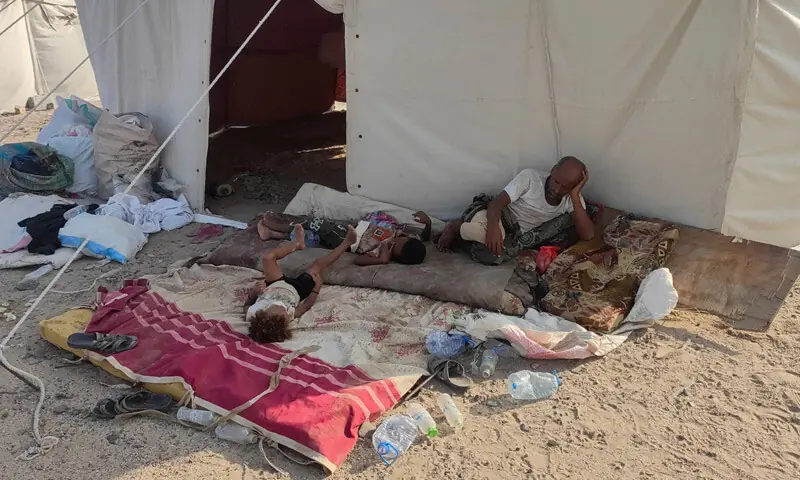
And in Yemen itself, the human cost is mounting as the UN’s migration agency reported on Monday that the renewed fighting had displaced 93,864 people.
Israel, watching closely, has stepped up the readiness of its naval forces amid growing alarm over Houthi advances, after the group seized Perim Island at the mouth of the Bab el-Mandeb Strait.
Leave a Reply