
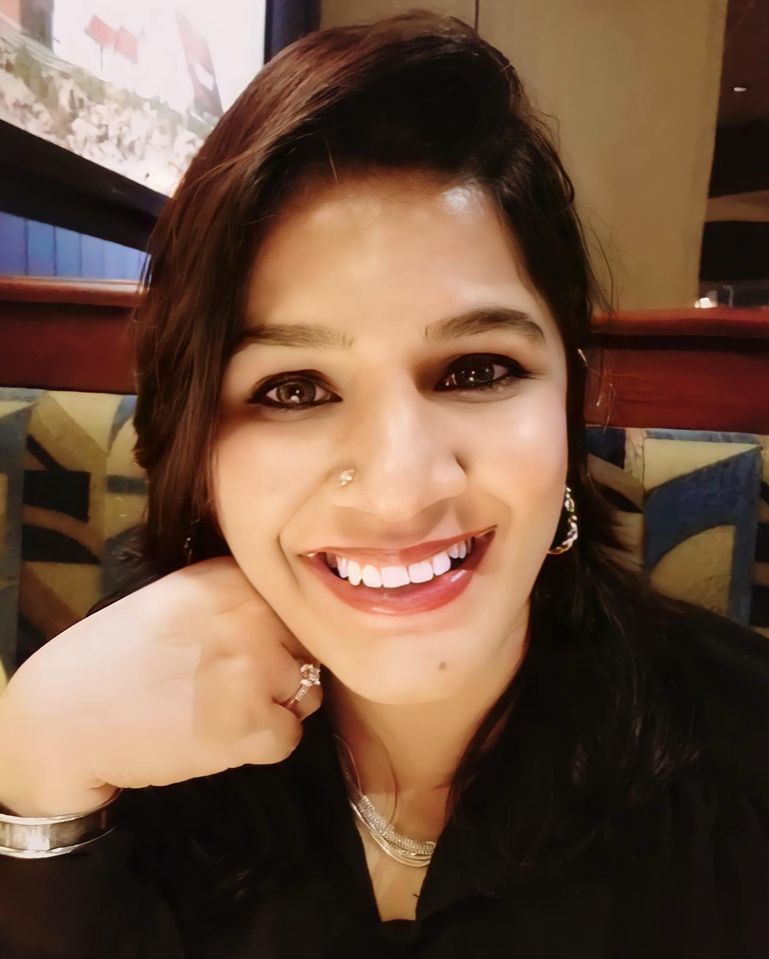
In five days, I turn forty. The number sits there like an uninvited guest who has already made itself comfortable on the sofa, feet up, asking for tea. I have spent the last few weeks collecting the scraps of thought that keep floating up — half jokes, half grief, half defiance — and stringing them into something that feels true. These are not polished conclusions. They are the raw inventory of a woman who has lived long enough to know that sadness has many possible sponsors, that attention is a finite and increasingly discerning resource, and that the people we love leave both completed promises and unfinished ones behind them.
Let me start with the most ordinary and most complicated truth: when I am sad, I genuinely do not know the source. Is it hormonal? Menstrual? Ovulatory? Financial? Seasonal? Or just plain, undiagnosed, unbranded sad? The body keeps its own calendar, and sometimes the mind is only the last to receive the memo. I used to fight this uncertainty. Now I mostly observe it with a raised eyebrow. The warrior in me still wants to charge at every low mood as if it were an enemy that can be defeated by sheer will. Most of the time I already know the charge is a bad idea. I do it anyway. That is the contract I seem to have signed with myself: knowledge is not always stronger than impulse, and impulse is not always wrong.
Age has not shortened my attention span. It has simply given it better judgment. The things that once held me captive for hours now get a polite two-minute hearing before I move on. This is not decline. It is editing. I no longer feel obligated to finish books that bore me, conversations that drain me, or performances of niceness that cost more than they return. Some people call this becoming difficult. I call it acquiring standards. When a dear friend once urged me to stay calm and lower my guard, I tried. I discovered that the moment I did, people began treating my softness as an open invitation. So I returned to the more useful identity: not everyone’s butterfly. Be a bee. Mind your own business, make honey, and sting when necessary. The sting is not cruelty. It is boundary maintenance. How you keep someone’s secret or protect their integrity says far more about your character than any public display of kindness.
I have learned that peace of mind is expensive and I am willing to pay for it. I will apologize even when I am not at fault if it ends the friction faster. I will not push myself into any task my heart has already refused. This is not weakness. It is the hard-won knowledge that some battles are not worth the residue they leave in the nervous system. Murphy’s Law still visits regularly — anything that can go wrong frequently does — yet I keep returning to Nietzsche’s quieter instruction: Amor Fati. Love your fate, including the hard parts. They are not interruptions of the story. They are the story.
Family remains the loudest chapter. My mother once told me that after three sons, when she became pregnant again, my father joked that if it was another boy they should leave him at the hospital. Of course it was a joke. Underneath it was a pure, almost childlike hunger for a daughter. He got one. That daughter is now nearly forty and still measures much of her life against the sound of his voice.
I miss Abba almost every day. When I was having a sick day he would look at me and say, “Sick? Where? You’ve only gotten more beautiful.” Suddenly the day rearranged itself. Life became possible again. I remember the small rituals of childhood exams: Abba dropping me at the centre, buying juice on the way, telling me to stay relaxed and keep sipping. I used to take that cup into the examination room like a talisman. Those memories surface without warning. Seeing my nephew leave for his HSC papers recently was enough to bring the whole scene back in high definition.
There are promises that never got kept. When I was six and had a fractured elbow, Abba took me to Uncle Sirya, hospital at Saddar, to change the plaster. There were horse-drawn buggies waiting outside. I asked to sit in one. He promised that once the plaster came off he would take me on a full city tour. I reminded him of that promise at irregular intervals for years. He always answered with the same cheerful certainty: of course he would. He never did. He left with other unfinished plans too — a trip to Mango Pir, the famous alligator lake in Karachi and buying those rough stone necklaces and begging bowls from the faqirs, seeing the Hindu cremation ground near the temple in Saddar. Yesterday I reminded Amma of all this while we were talking about him. She listened, then quietly arranged the Mango Pir visit and the buggy ride herself. The faqir jewellery and cremation ground remain open. Some promises transfer to the living.
Karachi has become, for me, the city where the people I loved most are buried. Papa(my Nana),Phuppi Jaan, Abba, and now my dear Taayi jaan too. Each return carries a low-grade fear that someone else will be added to the list before I leave again. The fear is not dramatic. It is simply accurate. Time moves faster than any of us planned. Yet it still holds the ordinary magic of a colleague noticing, first thing in the morning, that I am not wearing my red lipstick and asking if I am alright. Small proofs that we are seen.
I live much of my life abroad now. Pardes is a strange place: the people who start as strangers sometimes become more your own than the ones who share your blood. I have learned to accept this without guilt. At the same time, nothing competes with the sound of my mother’s laugh when I manage to make her sound like a child again. People say the best sound in the world is a child’s laughter. I disagree. The best sound is a parent’s. I am still the family clown who can produce it.
Social media, especially a platform like X, has become an unexpected pressure valve. You can speak without the usual social tax. You can be anyone, or no one, and say the thing that would be too sharp or too soft or too true in a room full of real faces. It is an invisible cloak. I use it carefully, but I use it. Venting there has saved more than one relationship in the physical world.
There is a particular joy that arrives only after travel, when the suitcases are emptied, the laundry is done, the clothes are hung, the garbage is cleared, the sheets are clean, and a bath has been taken. Only then does the mind permit the thought of dying in peace. Order is not vanity. It is a form of readiness.
I am turning forty with no grand thesis, only a growing list of recognitions. It is a privilege to grow old with someone. It is a privilege simply to grow old. Attention that refuses to waste itself is not a deficit. The warrior who still tries the bad idea is not a fool; she is simply unwilling to live entirely inside caution. Fresh paper still smells better than most manufactured pleasures. Singing along to Spotify alone in a room is still legitimate catharsis. And gratitude remains the only response that does not eventually exhaust itself.
Alhamdulillah for this life — for the opportunities I deserved and the ones I did not, for the gains and the lessons, the smiles and the tears, the achievements and the regrets, the friends and the necessary enemies, the happiness and the pain. For everything I have already survived and everything still waiting. I have no regrets large enough to cancel the rest. I love my God. I love my family. I love myself. I love the people who make me feel special without requiring me to shrink.
Forty is not a finish line. It is the moment the editor in me becomes more skilled, the bee in me more deliberate, and the daughter in me more determined to keep certain unfinished stories alive in whatever form is still possible. The sadness will continue to arrive with multiple possible explanations. The attention span will keep choosing its subjects with increasing ruthlessness. The warrior will still occasionally ignore better judgment. And somewhere, when the room is finally clean and the red lipstick is back on, I will know that this particular chapter, with all its noise and its quiet, was worth the living.
That is the strong, humorous, and stubbornly positive report from the edge of forty. The rest is still being written, one imperfect, fully claimed day at a time.
Leave a Reply