
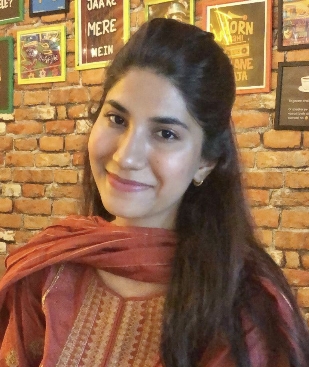
Two human rights lawyers. A couple. Sentenced. And suddenly, their names are no longer just names – they are symbols of defiance.
Bravery is not just an act. It is a force that liberates. It grants a profound sense of freedom and an inner independence that no system of power can fully take away. It is through this force that individuals are remembered not for what they possessed but for what they dared to stand against. If bravery is paired with a compassionate heart, one that feels the pain of the oppressed, the marginalized, the weak, the vulnerable, the journalists and those left alone to confront an unjust system, it transforms into something far greater than courage. It becomes a presence that does not just stand tall, but stands for others. And this form of bravery is not confined to men, as is often assumed. It lives just as fiercely within women. Today a powerful example of this is, Imaan Zainab Mazari.
Imaan Mazari and Hadi Ali Chattha are not just human rights lawyers; they are among those rare individuals who chose to stand where it was most difficult to stand. They took on cases many avoided – cases of enforced disappearances, the falsely accused of blasphemy, violations of free speech, the defence of journalists, ethnic rights, the right to peaceful protest and many more -standing for those abandoned by the very system meant to protect them.
But today, the same voices that once fought for others have been confined, unlawfully imprisoned and turned into symbols of defiance in a time that demands silence.
Their work was never limited to legal arguments or courtroom appearances. For families of missing persons, journalists facing intimidation and individuals falsely accused under some of the country’s harshest laws. Imaan and Hadi became more than legal representatives; they became a source of reassurance in moments of fear and abandonment. They stood not only inside courtrooms but also in protest camps, outside press clubs and alongside families carrying grief the state often refuses to acknowledge. In a system where many feel unheard and unseen, they offered not just legal defence but dignity, presence and hope.
What makes this moment even more disturbing is the conduct of the Islamabad High Court in the case of Imaan Mazari and Hadi Ali Chattha. Repeated delays, the reluctance to provide timely relief and a visibly restrictive approach toward two human rights lawyers have intensified the concerns surrounding the entire process. Even more unsettling, was the remark reportedly made during proceedings by Justice Azam Khan:
“Now your fate is like this, what should I do?”
A sentence that did not sound like justice speaking but helplessness wrapped in authority. And perhaps our greatest misfortune is not just what is happening to Imaan and Hadi but the fact that those entrusted with delivering justice have been imposed on us as custodians of justice.
At a time when justice demands seriousness, moral clarity and impartiality, they appear to have lost their sense of responsibility, dignity, judicial restraint and honor. Courts are meant to restore faith, yet moments like these leave behind anger, pain, disillusionment and the haunting feeling that those sitting in positions of justice are detached from human suffering and have forgotten the weight, dignity and human consequences attached to their words.
Perhaps the deepest tragedy of this moment lies in what we are choosing to destroy. Outspoken lawyer and civil rights activist Jibran Nasir powerfully remarked that when divides emerge within a society, bridges are built to restore connection between one side and another. They stand between power and the powerless, between fear and justice, between silence and those still struggling to be heard. Our greatest collective failure is that we have not only allowed these divides to widen, we are now dismantling the very bridges that sought to hold society together.
Speaking the truth or raising a voice for justice is increasingly treated as something dangerous, almost criminal. There was once a time when honest and principled people were respected within society, when those who spoke the truth were admired rather than feared. But today, a suffocating culture of fear has taken hold. If someone dares to speak openly against injustice, people whisper among themselves in disbelief:
“Why is this person still free? Why has no action been taken against them? Why has their voice not been silenced?”
Fear and oppression have been normalized so forcefully that society is gradually being conditioned to become numb, silent and morally indifferent. And perhaps the most frightening question is: how much further are we willing to fall as a society before this silence consumes us completely?
The deepest collapse of a society begins when those who stand for truth, dignity and the powerless are treated as threats rather than defenders of humanity. Imaan Mazari and Hadi Ali Chattha are no longer merely names in a legal case; they have become a reflection of a nation struggling with its own conscience. Because when voices that refuse to bow before oppression are pushed toward silence, the loss does not belong to them alone – it belongs to society as a whole.
History rarely forgets those who chose courage in difficult times and it remembers them with enduring respect.
The writer is an anthropologist, documenting social and cultural issues affecting youth today.
Leave a Reply