
• Prices likely to spike as markets reopen today after weekend attack shuts Saudi pipeline
• Diesel prices hit all-time high of $6.20 per gallon in US
ADEN: New strikes on Saudi Arabia and on ships in the Gulf tested nerves in the Middle East on Sunday, after an attack on a Saudi oil pipeline and an advance by Yemen’s Houthis threatened to worsen the wartime disruption to global energy supplies.
Oil traders were expecting prices to rise again when markets reopen on Monday, following the weekend developments that jeopardise supplies from the world’s biggest exporter, Saudi Arabia.
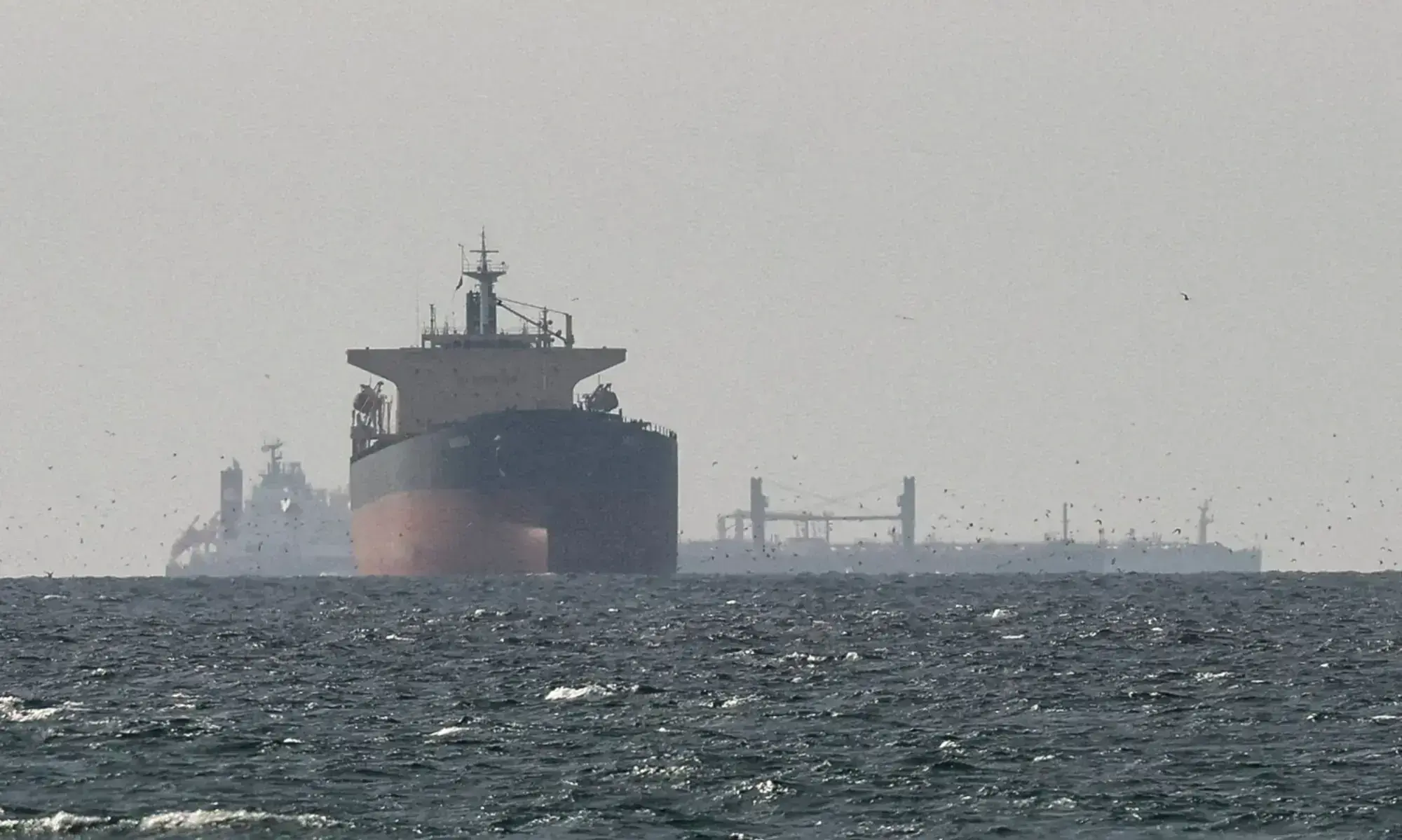
In the latest incidents in the Gulf, the British maritime security agency UKMTO said on Sunday that a vessel had been struck by a projectile as it moved through the Strait of Hormuz, causing a fire and forcing the crew to be evacuated. Iran, for its part, said one person was killed and four crew wounded aboard an Iranian commercial vessel struck off its coast.
In Saudi Arabia, state media released video of damage to homes and a mosque from the purported latest cross-border attack by the Houthis, in Jazan province in the south. The Houthis claimed separately to have struck a Saudi military base in a neighbouring province.
Southern Saudi cities have experienced regular alerts since last week, culminating in drone strikes on Friday that knocked out the 1,200km- east-west pipeline across the Arabian Peninsula that has served as the main route for global supplies of Middle East oil bypassing the Strait of Hormuz.
That same day, the Houthis captured Perim Island, which lies in the middle of the Bab El-Mandeb, the “Gate of Tears” strait that controls the mouth of the Red Sea.
Oil prices surged above $100 last week for the first time since July. The politically sensitive retail price of diesel fuel in the United States rose on Sunday to another all-time high above $6.20 a gallon.
Traders and Saudi oil buyers told Reuters on Sunday that Riyadh has enough oil stored at its Red Sea port of Yanbu to maintain exports for just five to seven days if the pipeline struck on Friday remains shut.
After that, as much as 4 per cent of global oil supply could be jeopardised, on top of the millions of barrels a day already lost to the disruption to traffic through the Strait of Hormuz.
Saudi Arabia has not given full details of the extent of damage to the pipeline or said how long it will remain offline. Sources that spoke to Reuters have given conflicting estimates for the time needed to fix it, ranging from days to weeks. Satellite images have shown huge columns of smoke from locations along the pipeline.
The US has so far failed to achieve the objectives President Donald Trump set out when he launched “Operation Epic Fury” in February: to end Iran’s nuclear programme, prevent it from being able to attack its neighbours and create conditions for its people to topple their rulers.
Iran, having withstood the superpower onslaught despite military and economic losses, hopes to emerge stronger than before the war, including with the newfound power to collect fees from ships that use the strait.
Leave a Reply