
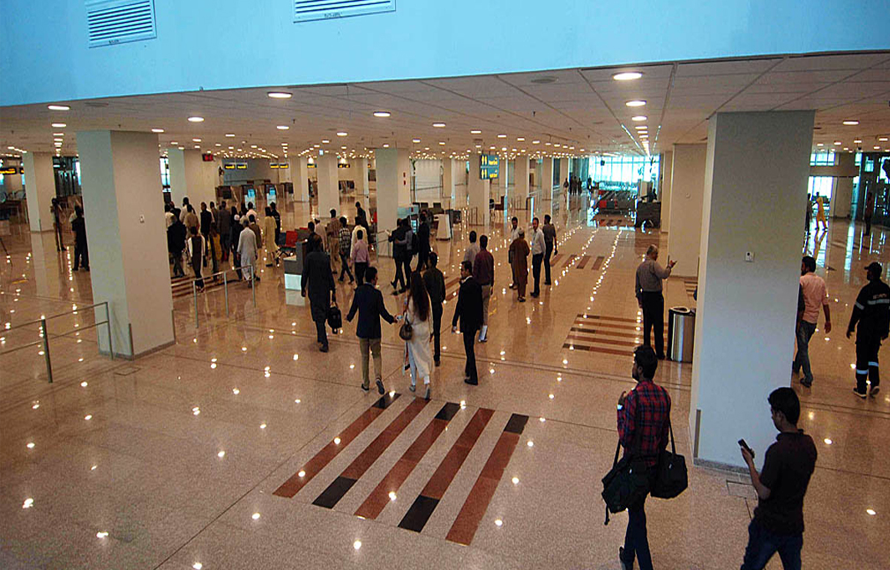
When Islamabad International Airport officially became operational in 2018, it was introduced as more than just a replacement for an outdated facility. It was presented as a statement — a gateway meant to reflect modern Pakistan, efficiency, and global standards. For travelers arriving in the capital, expectations were high: smoother operations, superior infrastructure, and an experience comparable to leading international airports.
At first glance, the airport appeared to fulfill those expectations. The vast terminal, contemporary architecture, and improved passenger flow marked a noticeable shift from the cramped and aging Benazir Bhutto International Airport. Many travelers welcomed the change, seeing it as a long-overdue upgrade that finally aligned the capital with other major cities in the region.
Yet, years after its inauguration, a different conversation has begun to take shape.
Frequent travelers and industry observers have increasingly pointed out issues that challenge the airport’s “world-class” label. During monsoon seasons, reports of water seepage from ceilings have raised concerns about construction quality. Elevators, often described as insufficient for peak-hour traffic, have added to passenger frustration. While these problems may appear minor individually, together they have fueled questions about long-term planning and execution.
Read more: Rock Climbing Championship Begins in Islamabad with Nationwide Participation
Academic analysis has further added depth to the debate. A 2025 case study by engineering experts Dr Bilal Karim, Engineer Muhammad Arif, and Engineer Zafar Ali Khan concluded that while the project met its financial and timeline goals, it failed to achieve projected commercial performance. The airport, according to the study, struggled to attract the expected volume of air traffic, placing its sustainability model under pressure. Critics argue that such findings point to deeper structural and strategic gaps rather than isolated operational flaws.
Despite criticism, not all aspects have drawn negative attention. Cultural design elements, including traditional truck art displays, have been widely appreciated. These features offer visitors a visual narrative of Pakistan’s identity, blending local heritage with a modern setting — an approach many feel adds character often missing from standardized global airports.
Beyond technical evaluations, the airport holds a more personal meaning for countless travelers. For many Pakistanis, airports are emotional spaces tied to life-altering moments — departures for new beginnings, tearful goodbyes, and long-awaited reunions. These experiences often shape perceptions as powerfully as infrastructure itself.
Islamabad International Airport today stands at a crossroads between promise and performance. While it may not yet fully embody the global standards once claimed, it continues to function as a critical national gateway — one layered with ambition, criticism, culture, and deeply human stories.
Leave a Reply